Local Culture

Ridgway is an old railroad town with its claim to fame being the location for True Grit. The town is framed by mountains, covered with snow today. I have the morning free before my photography workshop and wander on foot to Main Street. Today is Farmers’ Market day and I load up with fresh apples from a local orchard that remind me of apple picking days in Illinois, sourdough bread baked by a young woman who grows her own wheat (chatting with her I learn she is from Marin), and  plum jam from a woman who tells me all about the filming of True Grit. Her older sister was totally smitten by Glen Campbell and John Wayne!

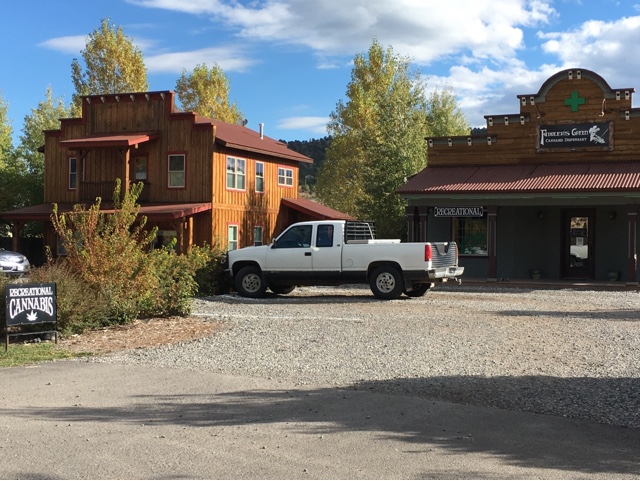
Colorado cannabis shop

Local history

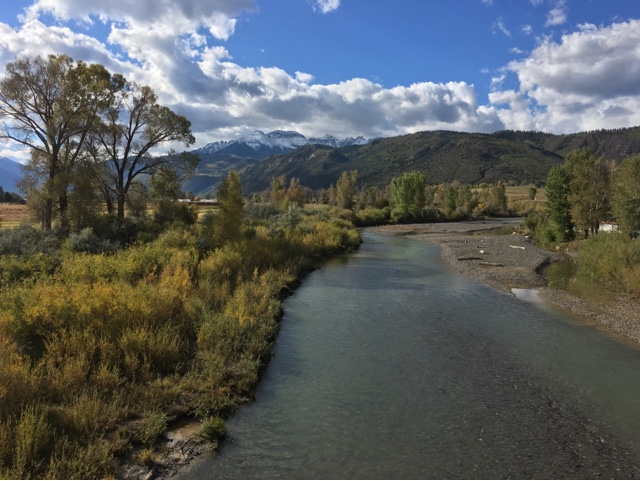
The Uncompahgre River

Central Ridgway

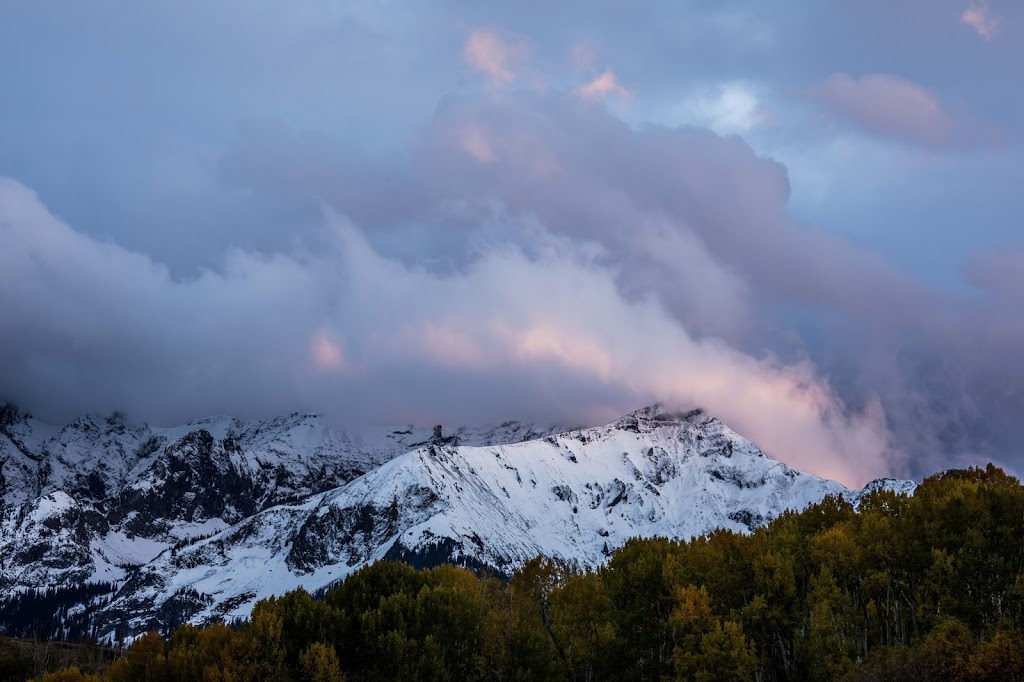
Workshop started today with classroom instruction on composition and lighting. Evening sunset shooting at Last Dollar Hwy where the snow covered mountain peaks were striking after a heavy afternoon thundershower.

Black Canyon of the Gunnison National Park

After a relaxing breakfast with Phil and Psyche, we make our way westward on our journey to the SW of Colorado, following the Gunnison River, a tributary of the Colorado that flows for 164 miles from the Taylor River of yesterday’s blog post through Gunnison and fills the  Blue Mesa Reservoir, Morrow Point Reservoir and Crystal Reservoir forming the upper part of the Black Canyon. one of the longest, narrowest and deepest gorges in the world. Along its 164 mile path, it ranges from 3-50 ft deep and 10-100 ft wide.

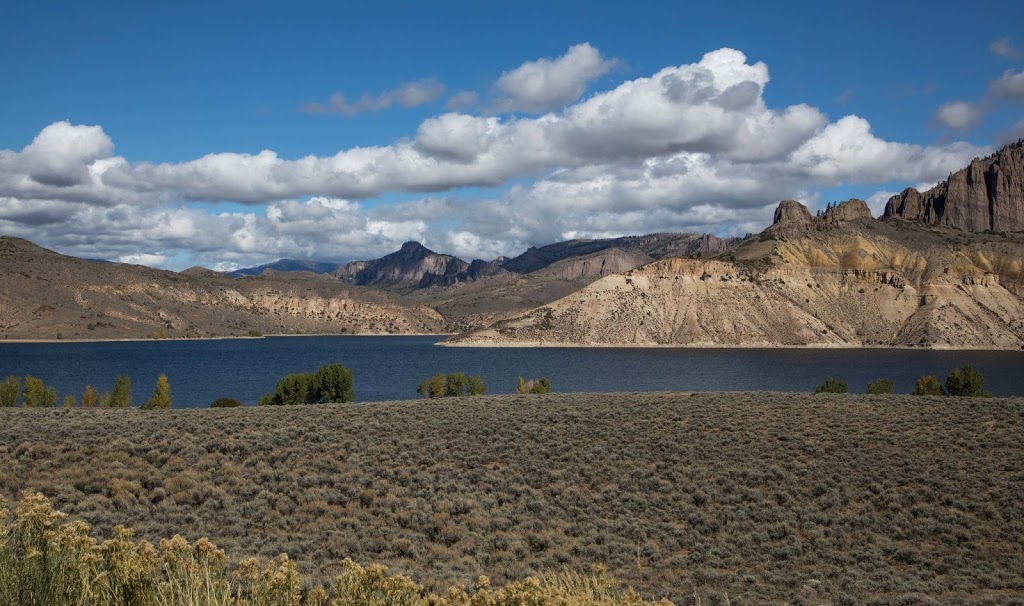
This is the Blue Mesa Reservoir

Our back roads adventure is a hike along a narrow section of the Gunnison River as it passes the Blue Mesa dam. Here we are close enough to touch the water. In a few hours we will be high above it.

Back on the road, we take a spur before the town of Montrose, leading to the Black Canyon of the Gunnison National Park, National Park #2 on this visit. Of the three entrances, only the South Rim is easily accessible by car. East Portal has 16% grades and North Portal is a less traveled gravel road. 

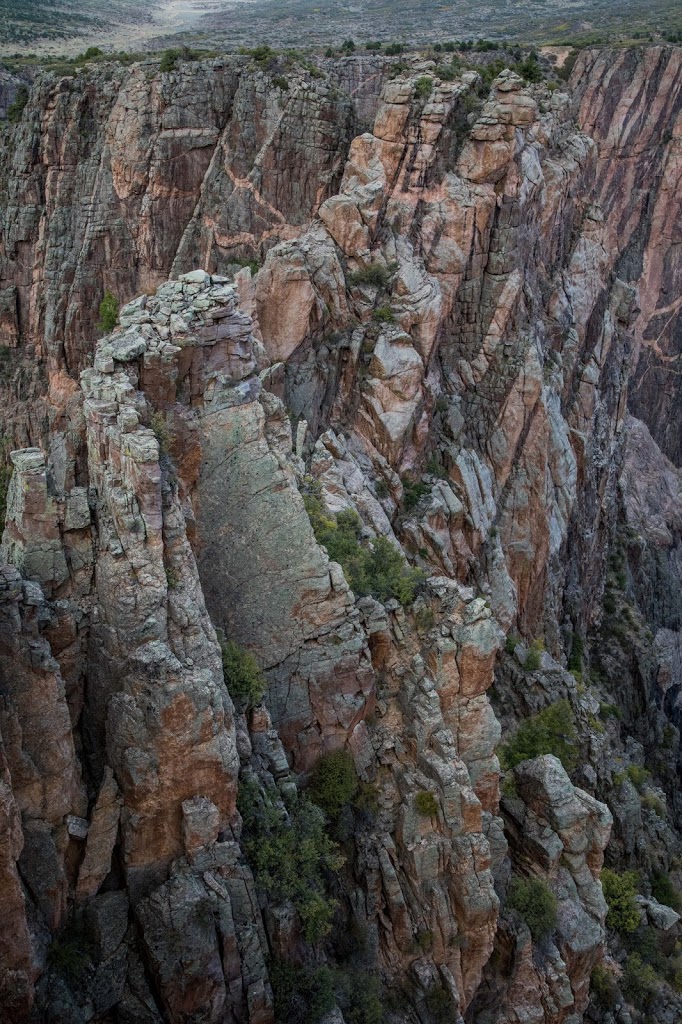
The South Rim drive has 12 overlooks, some by side of the road, others down a .25 mi. path. The views from the overlooks are incredibly beautiful but make my knees shake. I am grateful for the railings. 
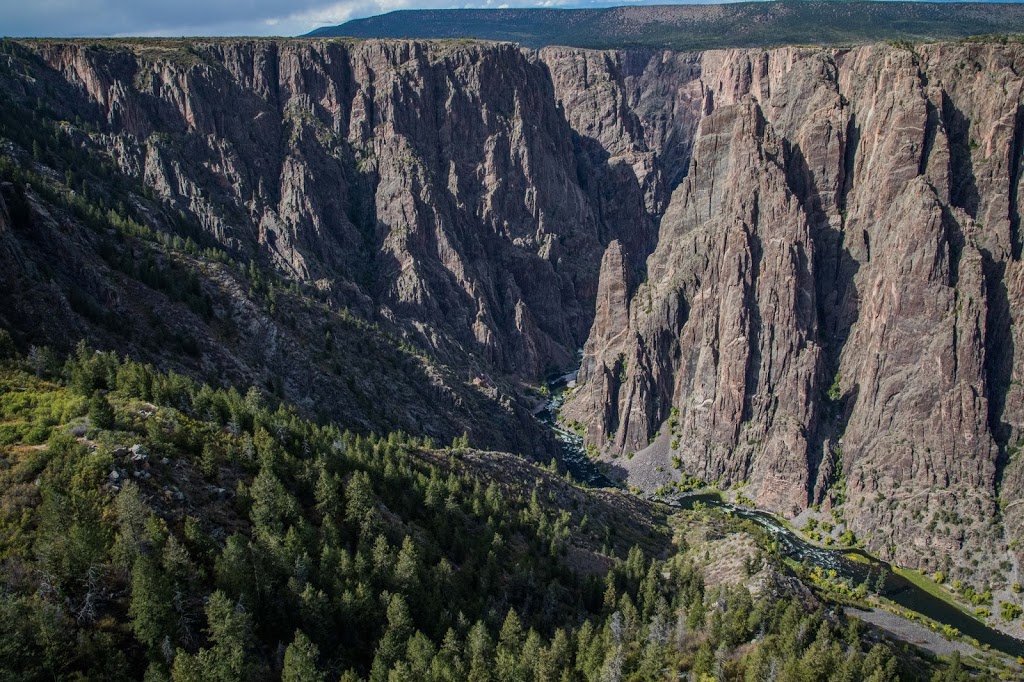
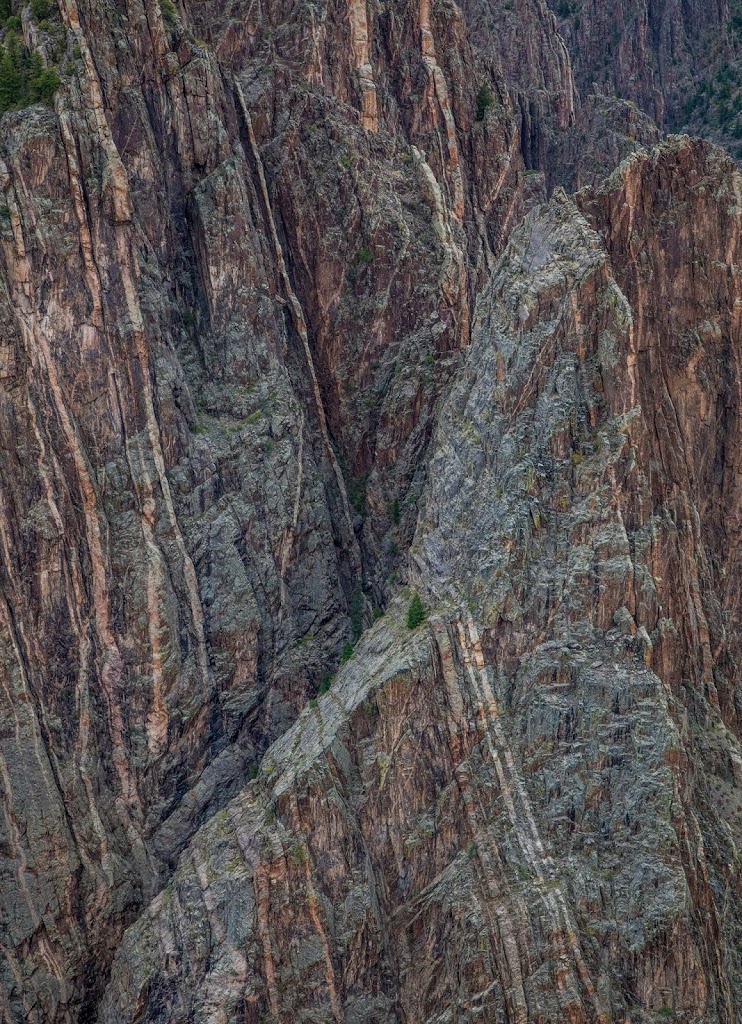
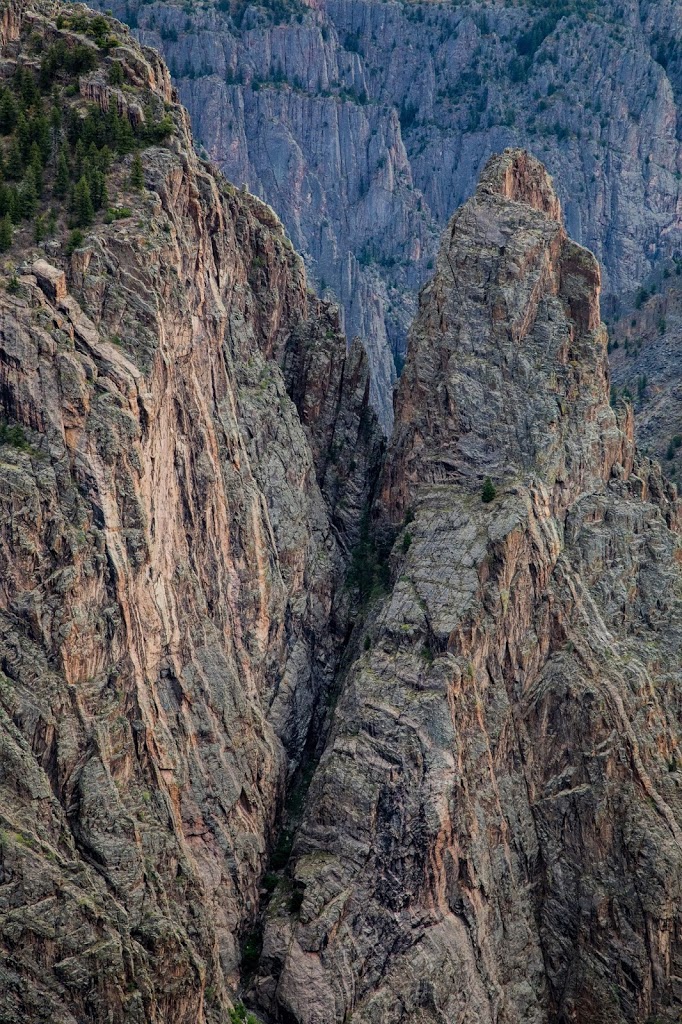
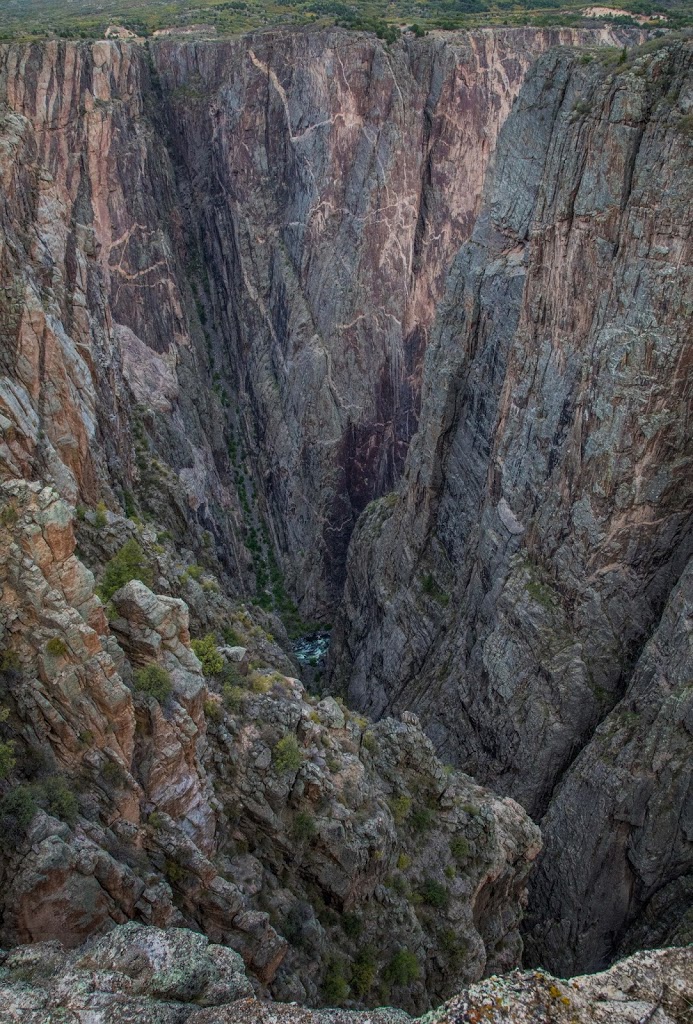
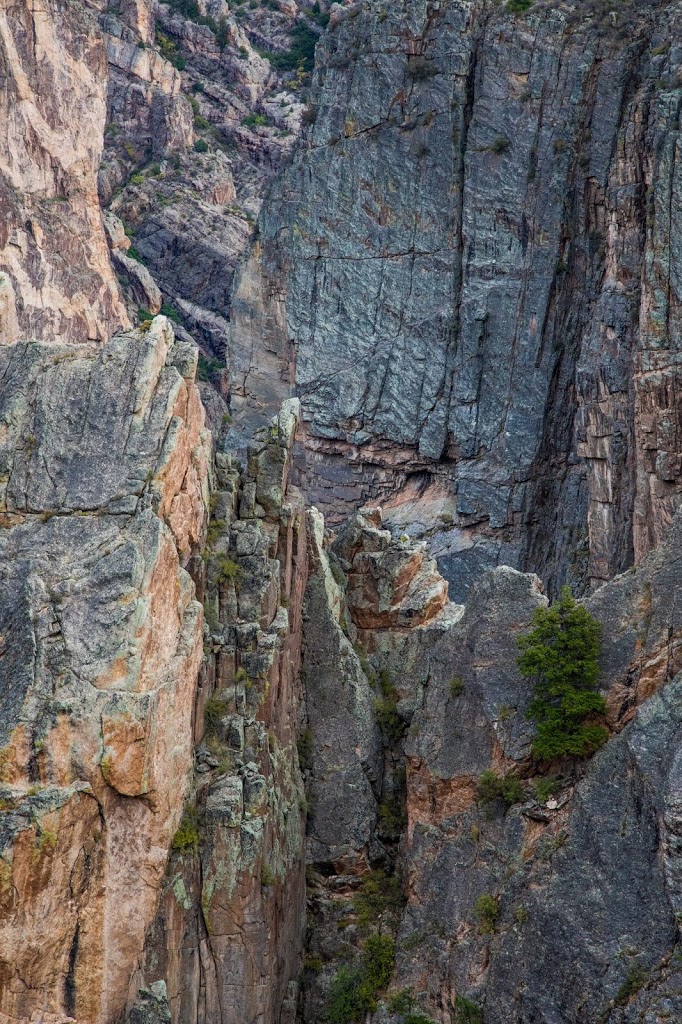
This is awe inspiring place is a visual testament to the power of erosion, a canyon 2,000 feet deep, with steep cliff walls that descend to dizzying heights below. 
Gunnison Point is the first stop along the rim, looking northward along the canyon. Directly opposite are two deep gullies separated by fractured cliffs.

Pulpit Rock

Cross Fissures – the river is not visible, but views are of overlapping ridges, plunging steeply down.
Rock Point and Devils Lookout

Chasm View is the most spectacular of the views.

Painted Wall, at 2,200 ft  is the highest vertical cliff in Colorado. It stands more than twice the height of the Empire State Building. The 3-dimensional patterns were formed billions of years ago by  molten rock squeezed into fractures and joints.

Cedar Point and Dragon Point
Sunset View, the westernmost viewpoint, the downstream section of the river to the Umcompagre River Valley in the distance.

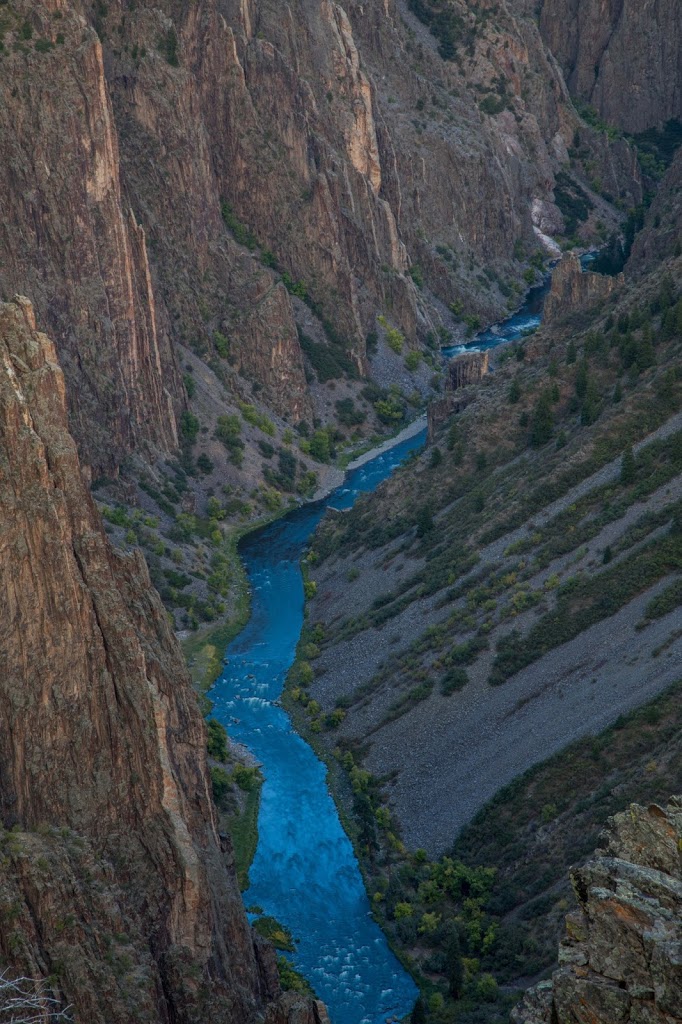
The last view of the canyon is at the entrance, Tomichi Point before we leave. The sun is setting, turning the river a brilliant shade of blue. 
It has been a spectacular day and the park’s beauty is far beyond my expectations. Definitely worth a visit!
A Day to Kick Back

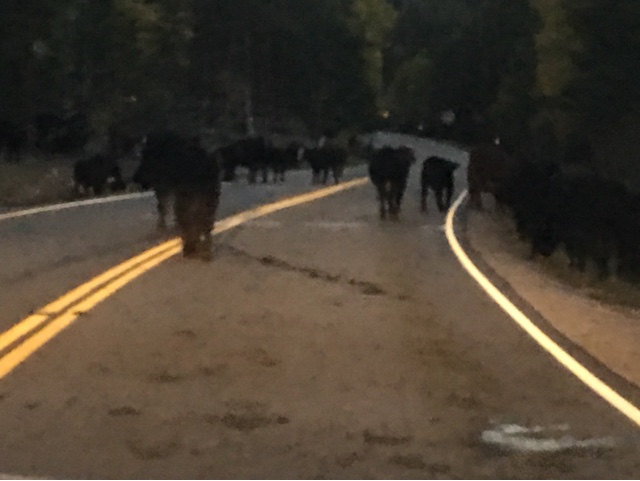
Nothing on the schedule, a day to kick back and explore. We drive north of Gunnison to Taylor Reservoir and Park so Ray can try fishing this river. We are surprised to see cattle grazing openly on the sides of the paved forest service highway and meandering on the road. This is apparently a grazing project with he US Forest Service – we maneuver our way amidst roaming cattle, hundreds of them along a stretch of about 20 miles. I make a mental note that driving this section after dark might not be a good idea!
I spend the day reading The Zookeeper’s Wife, a wonderful story about Polish zookeepers who saved over 300 people from the Nazis by hiding them in zoo cages. Ray fly fishes on the Taylor River below the Taylor Reservoir. and finds the fish to be somewhat elusive. The beautiful narrow river runs alongside multiple forest service campgrounds which we store in memory for a future trip.

Traveling in Colorado makes me more aware of the story of the Colorado River, which currently has 15 dams on the main river and hundreds more on its tributaries. The water wars in Colorado extend to neighboring states of California, Arizona, Utah, Wyoming, New Mexico, and Nevada). The Colorado River is the most litigated body of water on the planet. With increased demand downstream and climate change, I wonder what the future of this river will be.

We end the day with a delicious meal at a gem of a place in downtown Gunnison, the Twisted Fork.
It is a small fusion restaurant and we enjoy a steaming bowl of ramen with fresh veggies and great fried chicken.

Foliage Seeker’s Heaven

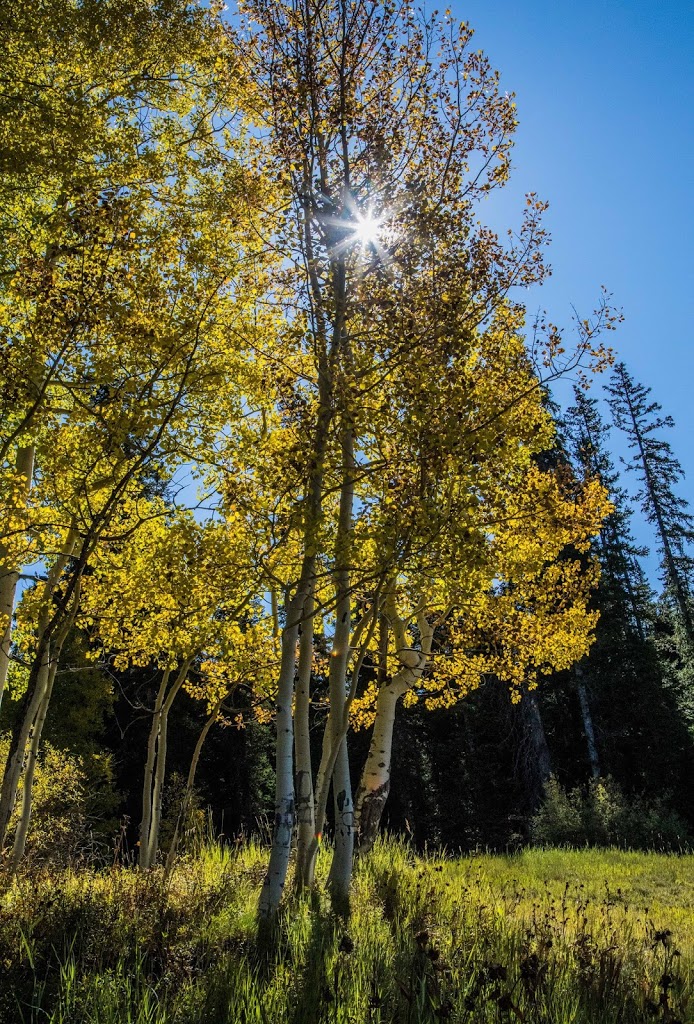
After several days of rain, we happily welcome blue skies and sunshine. It is a great day for a drive and we head north up 135 to the town of Crested Butte, an old mining village with loads of charm. The small single street downtown is lined with colorful Victorian style buildings with numerous organic grocery and coffee houses.  Mount Crested Butte looms over the town which sits at the end of a long valley surrounded by a designated wilderness area. The Elk Mountain Range  stretches north to Aspen and south to the Black Canyon and the 16 mile Kebler Pass runs through this range. This is our destination for the day, a foliage seeker’s heaven.  The dirt road takes us through vistas of multicolored ranges, and the world’s largest single grove of Aspens, which stretch for miles and miles,  in various stages of color – so many aspens that we are overwhelmed by the beauty of the season. The end of the drive is a wide vista of the Colorado range and we are astounded at the expanse of wilderness that has not sign of development or human occupation. 
We end the day with local homemade ice cream at The Third Scoop in downtown Crested Butte.
We discover that internet can be accessed, just not from the cabin, so sitting in our car by the lodge office, we connect to civilization.

If There is Rain, There Will Be Snow

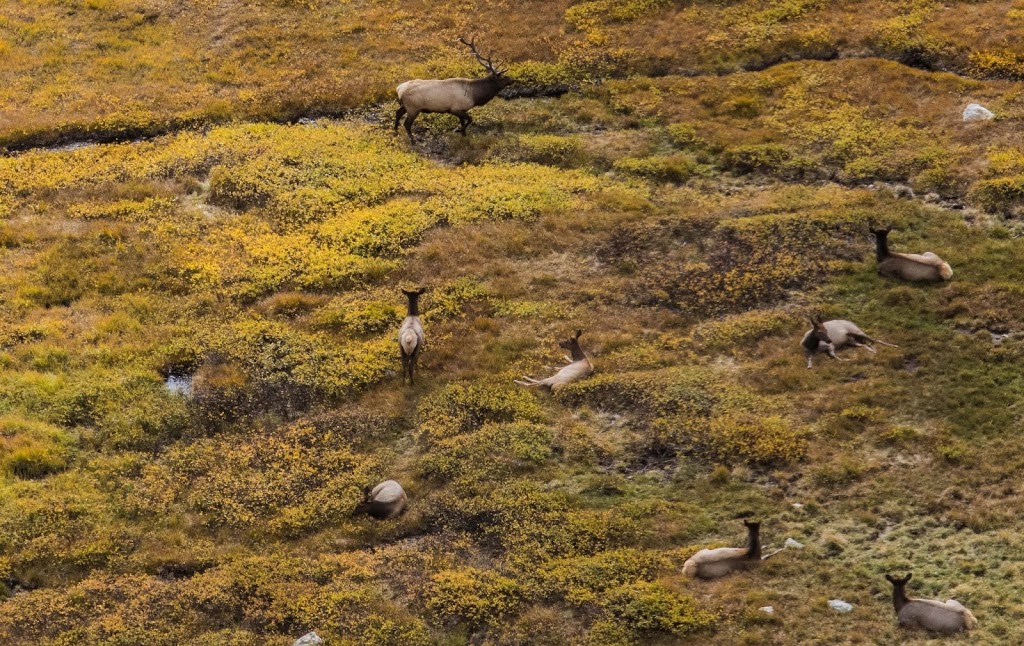
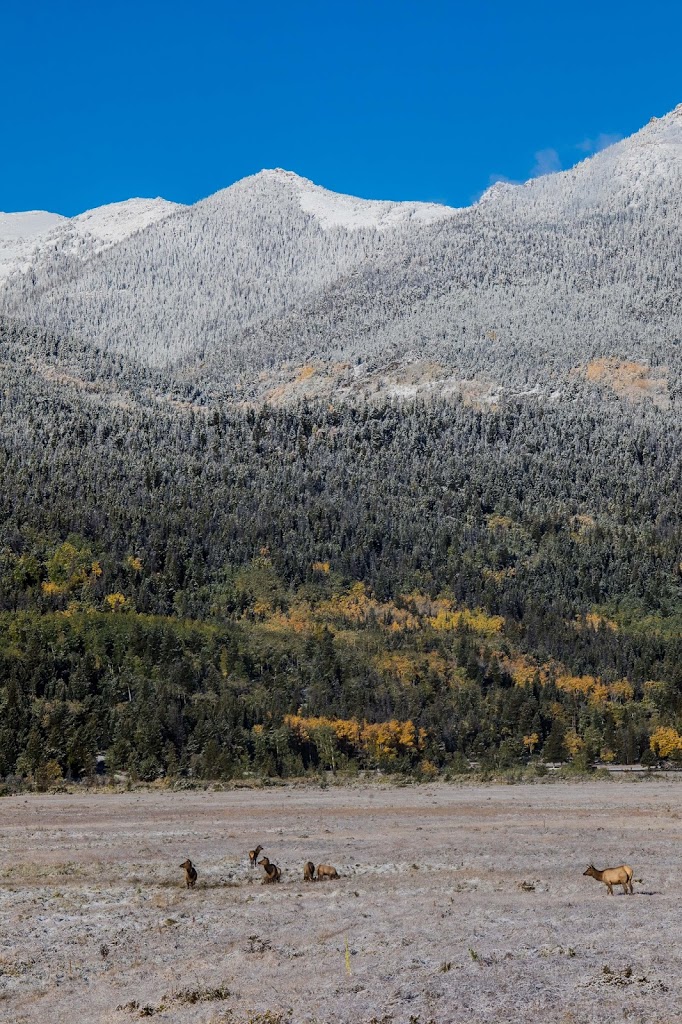
The evening rains bring a dusting of snow to the mountains and forests of Estes Park. Winter has come to the Rocky Mountain National Park overnight and we enter the park early in the morning to photograph in the best morning light. The golden aspen leaves shimmer with icicles and droplets, and the pine forested mountain ranges appear to have been dusted with powdered sugar. The elk herds are out in the meadows and the bulls’ bugles echo through the valley floor. It is a sight to behold and a reminder of how close to nature we are in this vast place. As the sun rises higher in the sky, the snow line gradually rises and disappears. 
Today is a long driving day and we make our way west toward Vail as the skies alternate between cloudy and drizzly. As we drive through Fremont Pass, we pass a series of huge reservoirs and begin to wonder why they are there at 11,000 ft in elevation when we come upon a HUGE mine that has stripped the entire mountain. The sign says Climax Molybdenum, which we learn is used in the manufacture of lightweight steel and other chemicals. We are shocked by its size! It is clear now that the names of Copper Mountain, Leadville, Telluride, Silverton originated from all the mining in Colorado.
The rest of the drive is uneventful as we make our way south to Gunnison Dinner is burgers at a local Gunnison joint with John Wayne posters on the wall and a very western small town feel. 
Our lodging in Gunnison is at Lost Canyon Resort, 8 miles from town – the skies area about as dark as they can get. We find the old log cabins sitting along the Gunnison River and deep in the heart of fly fishing country. Inside, the walls are lined with logs, the ceiling and floor with wood and a pot bellied stove stands in the corner. The tiny gas stove lights with a match, only a few outlets are in sight and there is no internet, but the place is cozy and reminds me of a Laura Ingalls Wilder story! 

Autumn in the Rockies

Rocky Mountain National Park is comprised of 265,461 acres situated between the towns of Estes Park on the east and Grand Lake on the west. The Continental Divide runs directly through the center with the headwaters of the Colorado River located in the north west.  It is incredible to think that this is the start of its 1,450-mile-long journey that is the source of water for 40 million people. 
Water wars in Colorado are as fierce as they are in California. In July of this year, Denver Water wind a permit from the federal government for a $360M Moffat Tunnel Collection System to divert water from one of the Colorado River tributaries, run it under the Rockies and provide water for Denver and Boulder. The future of the river is uncertain. 
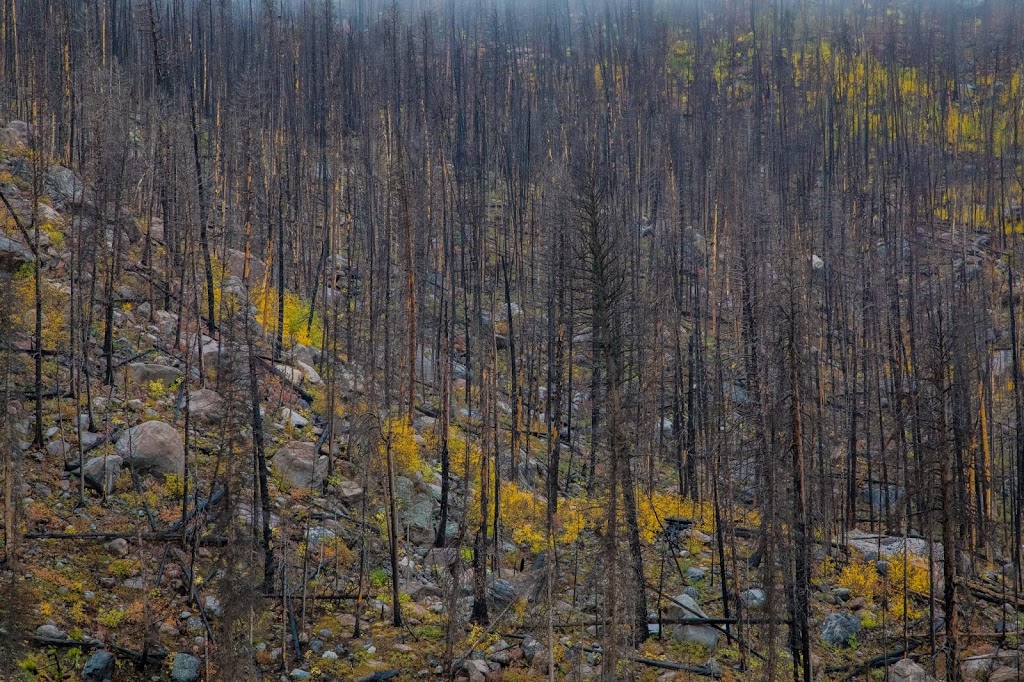
Autumn in the Rockies is as beautiful as it is unpredictable. With the Trail Ridge pass still closed due to snow, travelers are limited to the east side of the park. Long lines of cars attempt to reach Bear Lake, one of the few paved and flat trails in the area. Our destination is Cub Lake, a 5 mile round trip through terrain that was charred in the largest wildfire of the park’s history in 2012. 3500 acres burned and evidence of that fire can be seen in the matchstick like pines that line the slopes of the mountain. The emerging aspens appear like a line of fire amongst the dried tree trunks. The trail rises from the Moraine Valley and turns colorful as it traverses groves of aspens. Cub lake is covered in lily pads, which we imagine must be quite a colorful sight in its summer bloom. Despite the drizzle, the scenes are still gorgeous though trying to keep my camera dry is a bit challenging. 

Fall in the Rockies is also elk rutting season. 2,000-3,000 elk call the Rocky Mts. their home in the summer and herds of elk can be seen in the meadows, with the male bull the center of attention, as he struts, bugles (scream and grunts) and vies for the hearts of the cows. 

Snowy Adventure Rocky Mt. National Park

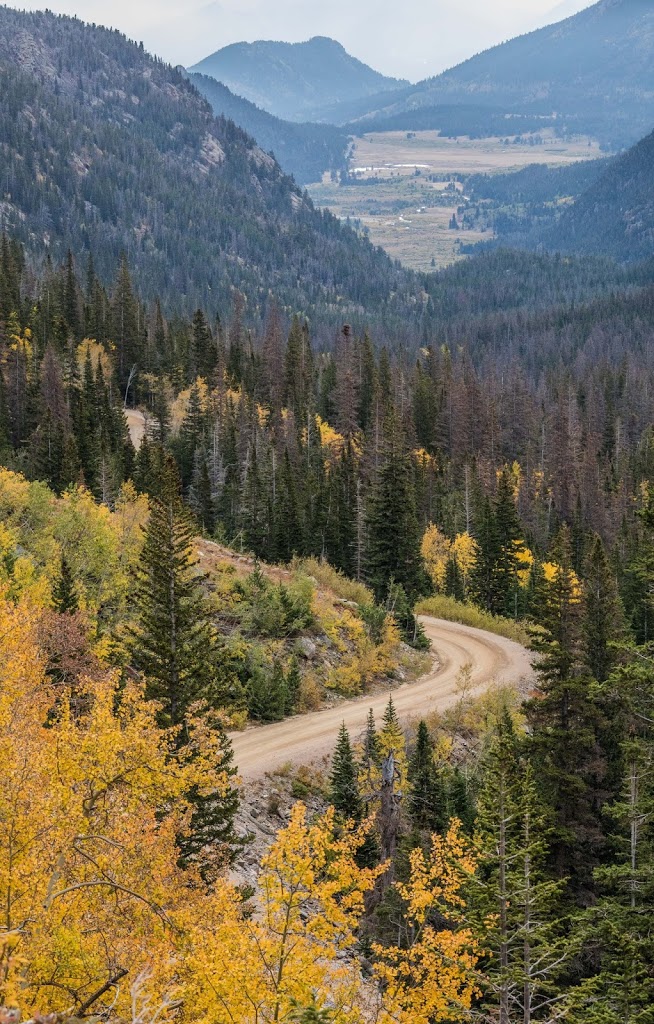
We start our day early as the weather report was predicting rain in the afternoon. We leave our Ponderosa Lodge cabin in Estes Park before 8 and head into the Rocky Mountain National Park and up Old Fall River Road, a one way dirt road with no guardrails that switchbacks higher and higher along the northernmost section of the Rock Mountain National Park. Riding in the car is about the right amount of activity for us today as we are still acclimating to the high altitude – even walking 50 ft on a flat trail leaves us breathless.

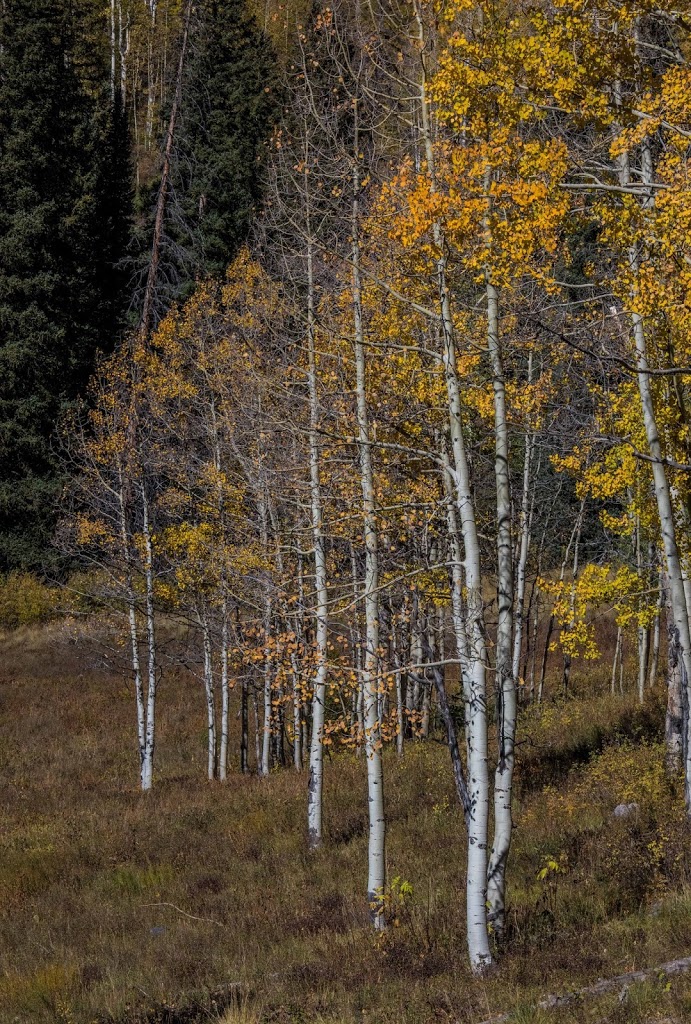
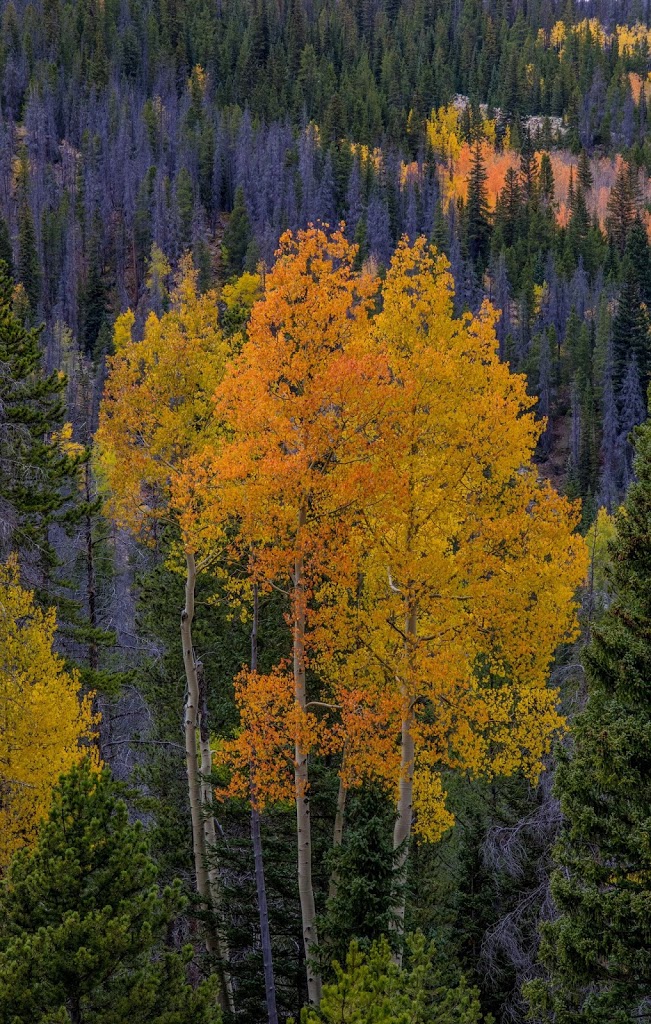
The aspens show their fall glory, and the pine covered mountainsides are aflame with golden yellow and fiery orange. Though the day is cloudy with intermittent sunshine and showers, I am able to capture the essence of the season.  We stop at numerous pull outs along the way, each with a different view of the rockies.

At mid day, we reach the summit at 11,796 ft. in elevation. The Alpine Visitor’s Center is a refuge from the gusty cold wind. I try to photograph from the deck but the winds are too strong. From inside, I can see a bull elk and his harem in the distance. It is rutting season in the Rockies.

Leaving the Visitors Center, the road intersects the Trail Ridge Road, the alpine highway generally open until mid October, that runs across the park. At 2:00, we decide on one more short walk before heading back to Estes Park along the Trail Ridge Road. As we head out of the parking lot and onto the road, the rain turns to light snow and we see a ranger’s truck ahead with it’s lights flashing. They had just closed the road due to winter conditions at the summit. Unfortunately this means we are unable to return to Estes Park via this highway and must make our way around the southern part of the park, turning a 1 1/2 hr. trip into a 4 hour one.

The conditions turn wintry with falling snow and white out visibility crossing the pass by Winter Park. It is a gorgeous sight but slow going.

We reach the bottom of the summit and snow turns to rain. I am able to capture a few photos of snow on the aspens. The scenery is spectacular. Seeing falling snow on yellow aspens is a rare treat for us and we are captivated by the beauty.
Finally, we reach Estes Park in the early evening. It has been a long but memorable day and what an adventure!

Sea Level to Mile High

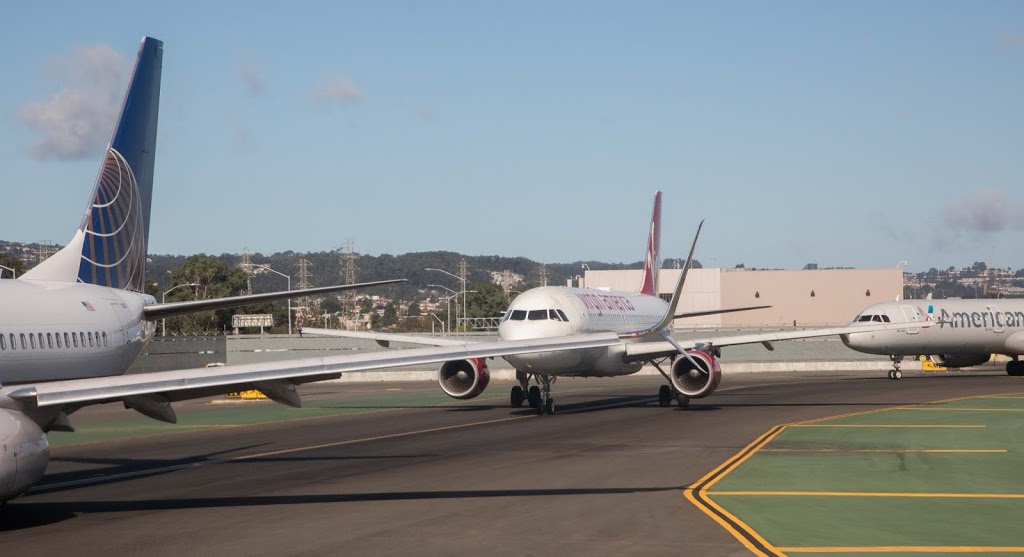
San Francisco was clear with puffy white clouds as we depart early in the morning. Finding traffic congestion bad on Bay Area roadways? SFO is no different as today’s runway was bumper to bumper!

There is a reason why we love this beautiful city. Look how gorgeous it is today.

 As we fly over the east bay hills, the wind turbines appear to be matchsticks in the undulating hills.

I am surprised that Denver is so flat!. The colorful farm fields appear as sharp striations and as circular plots of land.

We arrive to 80 degree temperatures in Denver. After collecting our car, we head out to Estes Park. Our last visit here was 30 years ago, with 2 little kids ages 3 and 5 who both got altitude sickness. Not much looks familiar.

We spend the late afternoon with a quick stop at Bear Lake and Sprague Lake. Here is a teaser to what is to come, though rain, snow and cold weather is predicted for the next few days. We wonder if this is all the color we will see!

We have a delightful dinner at the Dunraven Inn visiting with Ray’s former UI and fly fishing buddy, Phil and his wife Psyche, who provide us with many wonderful tips for the area.