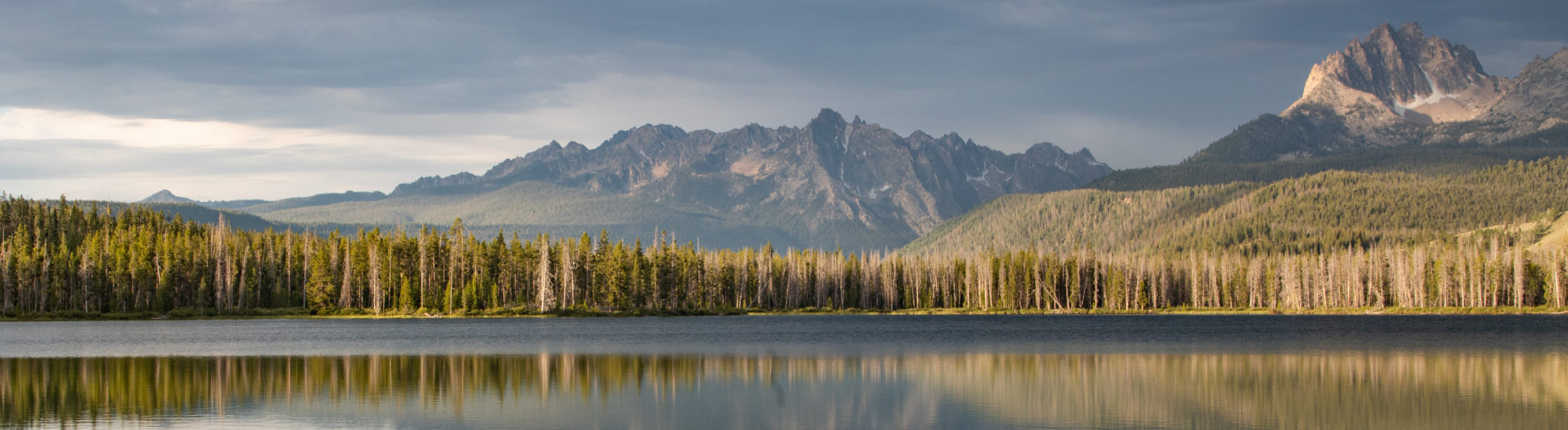
Rocky Mountain National Park is comprised of 265,461 acres situated between the towns of Estes Park on the east and Grand Lake on the west. The Continental Divide runs directly through the center with the headwaters of the Colorado River located in the north west. It is incredible to think that this is the start of its 1,450-mile-long journey that is the source of water for 40 million people.
Water wars in Colorado are as fierce as they are in California. In July of this year, Denver Water wind a permit from the federal government for a $360M Moffat Tunnel Collection System to divert water from one of the Colorado River tributaries, run it under the Rockies and provide water for Denver and Boulder. The future of the river is uncertain.
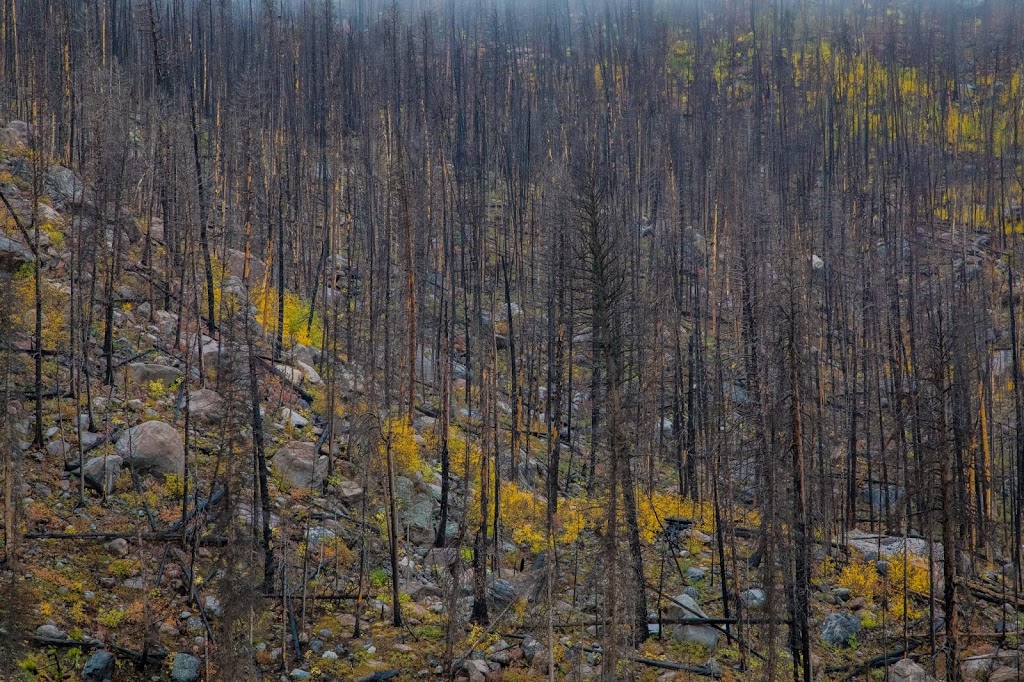
Autumn in the Rockies is as beautiful as it is unpredictable. With the Trail Ridge pass still closed due to snow, travelers are limited to the east side of the park. Long lines of cars attempt to reach Bear Lake, one of the few paved and flat trails in the area. Our destination is Cub Lake, a 5 mile round trip through terrain that was charred in the largest wildfire of the park’s history in 2012. 3500 acres burned and evidence of that fire can be seen in the matchstick like pines that line the slopes of the mountain. The emerging aspens appear like a line of fire amongst the dried tree trunks. The trail rises from the Moraine Valley and turns colorful as it traverses groves of aspens. Cub lake is covered in lily pads, which we imagine must be quite a colorful sight in its summer bloom. Despite the drizzle, the scenes are still gorgeous though trying to keep my camera dry is a bit challenging.


Fall in the Rockies is also elk rutting season. 2,000-3,000 elk call the Rocky Mts. their home in the summer and herds of elk can be seen in the meadows, with the male bull the center of attention, as he struts, bugles (scream and grunts) and vies for the hearts of the cows.
