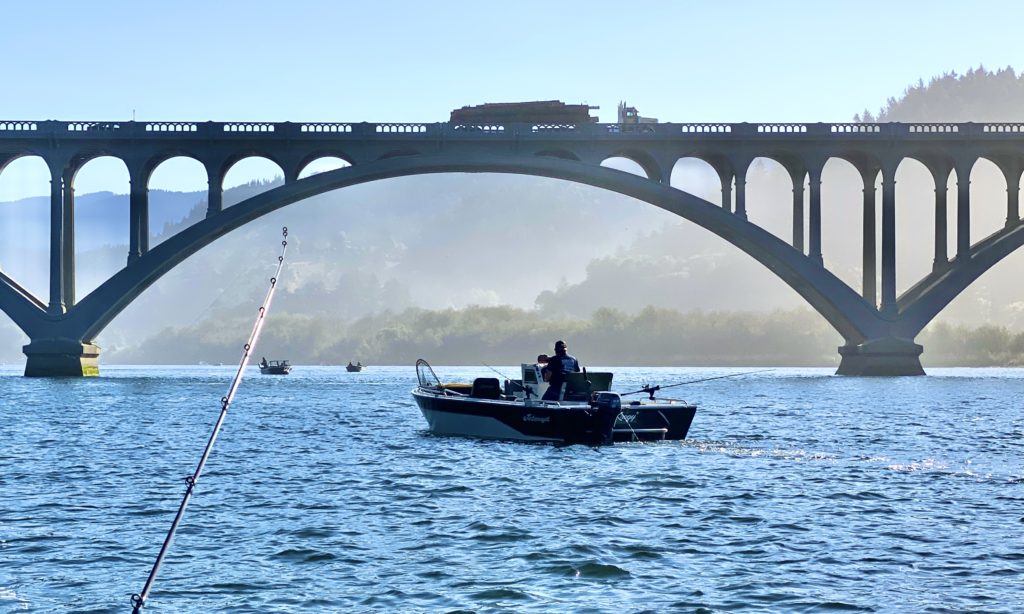
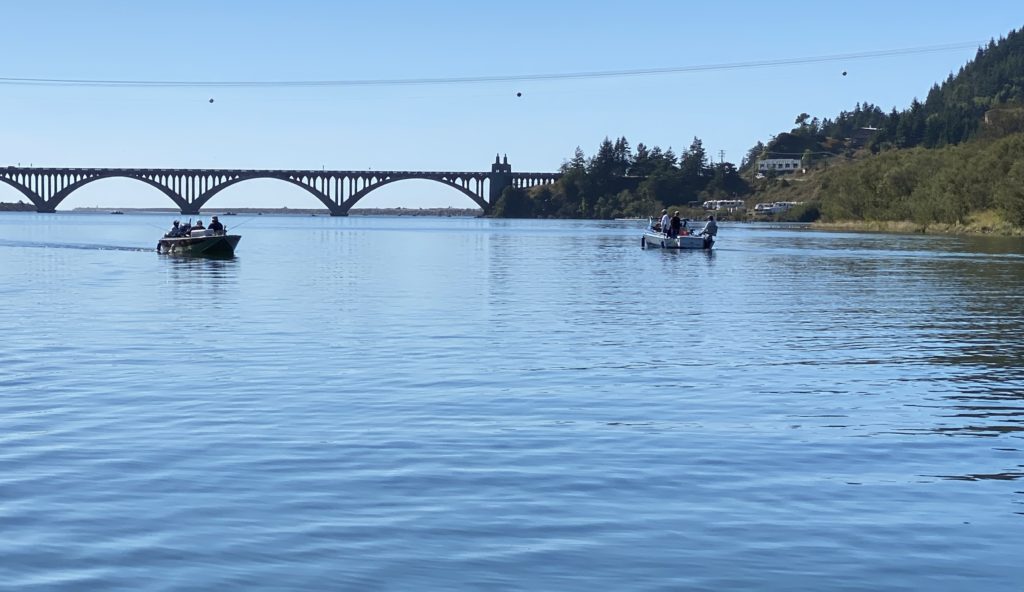
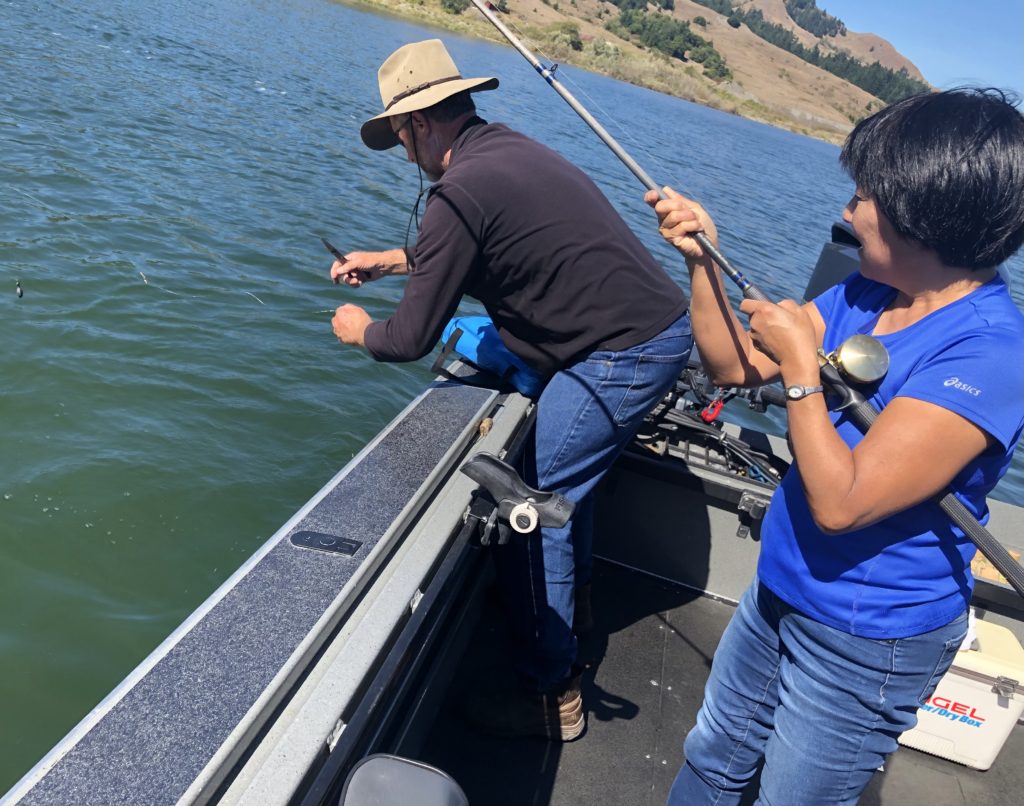
We are appreciating the good fishing years and the abundance of salmon we have enjoyed over the past 20+ years. The river level upstream on the Rogue was low due to decreased amounts of water released from the reservoir, a similar story heard across the west. Drought, climate change…? The salmon were having a hard time getting over the sandy bar created by the high wave action and decreased river flow so very few Chinook were caught by wishful fisherman trolling up and down the bay. Several wild salmon were returned back to the river; Greg says the ratio is about 50/50 hatchery but seems higher the few days we are here! We leave with two “jacks”, young chinooks that are small. The weather was perfect but the cooler returns quite empty. Thus ends our journey as head home tomorrow.
If it is Tuesday, it must be Oregon, the KOA in Albany near Corvallis. Lots of logging trucks, clear cut hillsides and lumber mills amidst the forested countryside.
Logs en routeTreelessMills
On Wednesday, we arrive at Secret Camp in Gold Beach, a secluded rv park nestled in the woods. We prepare for two days of salmon fishing with Greg, our guide of 20 yrs.
Alas, the fishing gods were not smiling on us today. Under clear blue skies and warm temperatures, we trolled up and down the bay for 8 hrs, getting two nibbles and catching a shimmering green colored wild silver salmon that we had to release. No fish for dinner!
The RogueReeling inA wild salmon returned to the river
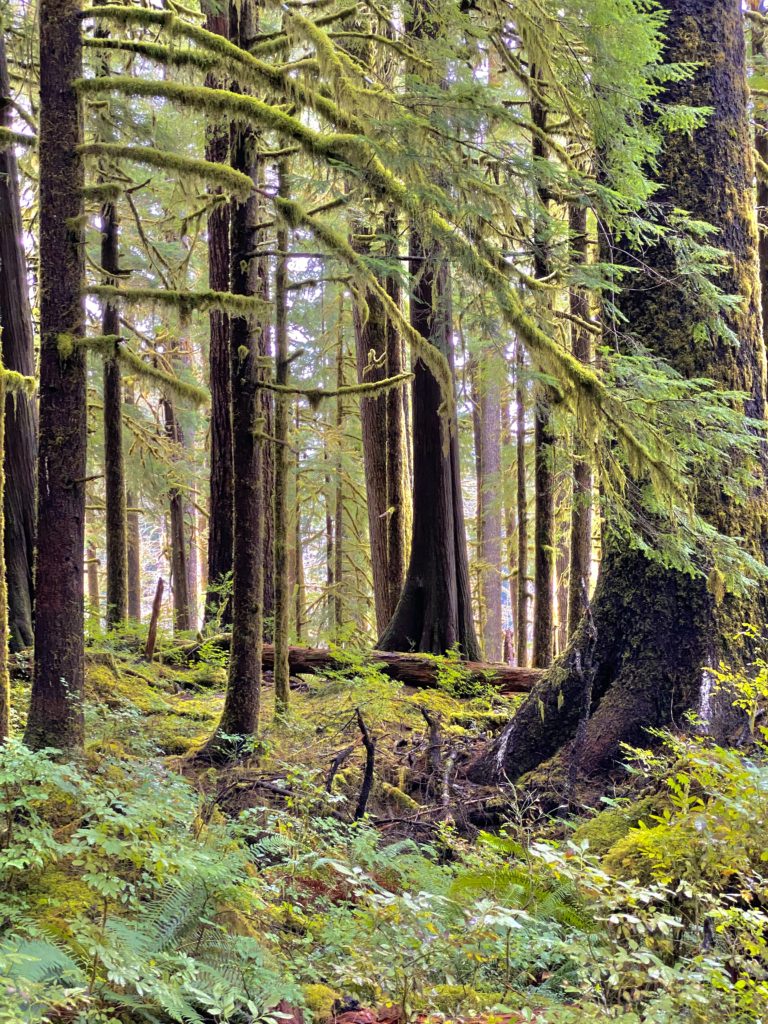
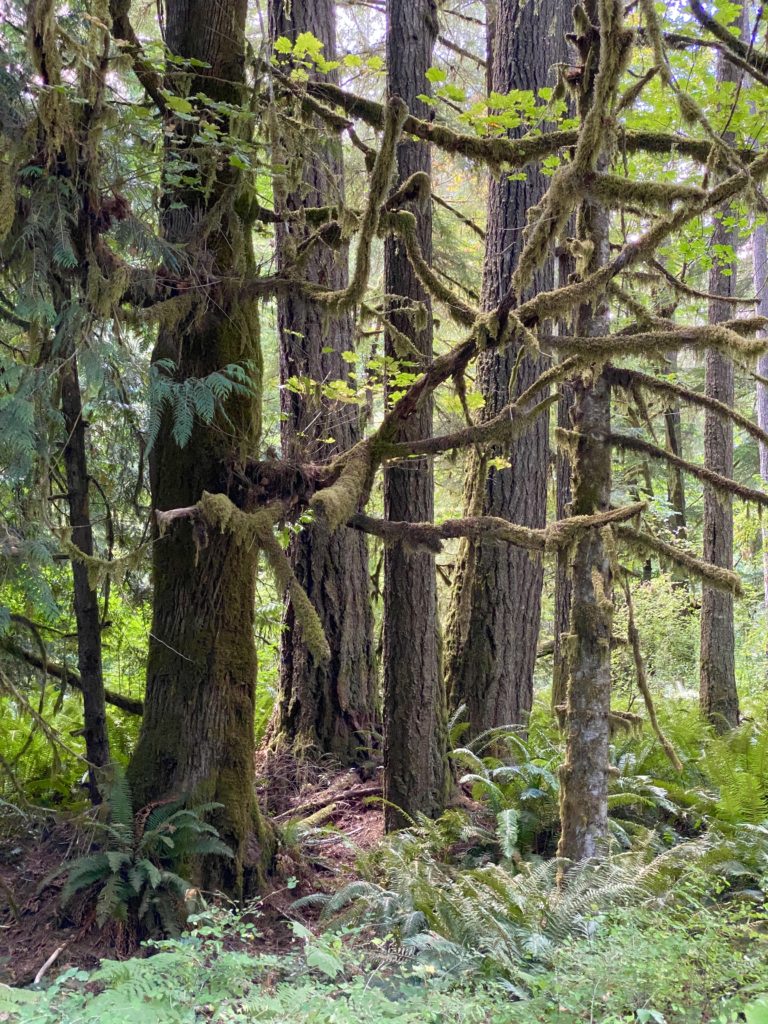
Lake Quinalt sits in a glacial carved valley within the rainforest. We are on the south shore; the north shore is part of the Olympic National Park. The southern forest is much more accessible for photography with heavy hanging moss and beautifully covered maples, firs, cedar, hemlock and spruce.
Mossy forest
Below is an example of a “nursery tree” where a dead log or stump acts as a nursery for a new tree, the wood providing a source of water during the dry season.
“Nursery tree”
My birthday hike today takes us to Irely Lake. The trail is rugged and muddy with a questionable footbridge across the creek!
Birthday hikeWould you cross this?
Our visit to the Olympic NP ends with a colorful sunset and a birthday dinner at Salmon House, all take-out these days but delicious pepper jelly blackened salmon and blackberry pie.
Pepper jelly blackened salmonSunset over Lake Quinalt
Traveling south along the Peninsula coast, the highway is lined with dense forest but outside the boundaries of the national park, evidence of logging is everywhere-Pacific Lumber signs, huge logging trucks and upon close examination, the dense forest only extends a depth of 100 or so yards beyond which are young trees.
Traveling south
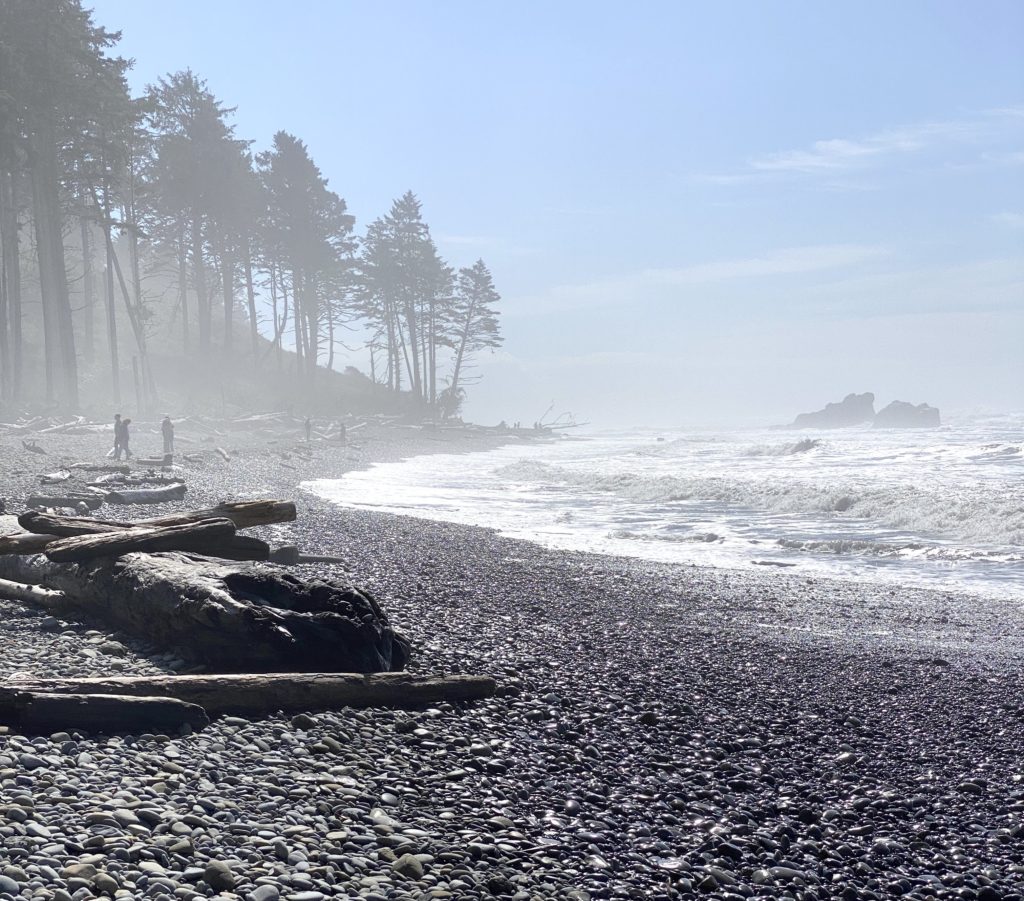
We stop for lunch at Ruby Beach, one of the most beautiful beaches I have seen on the west coast.
Ruby Beach
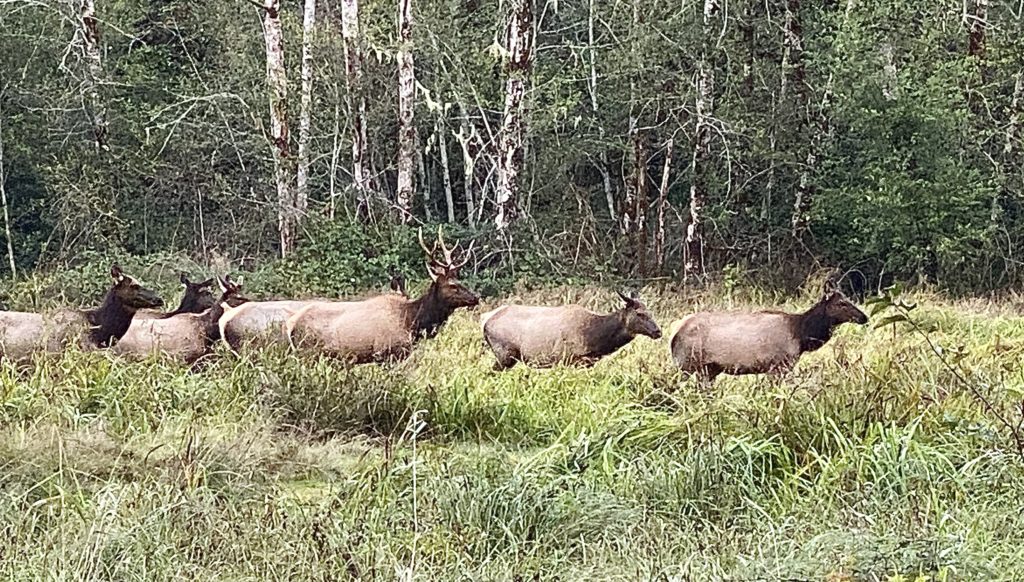
Some photos of the wildlife:
Elk on the runVery cute grouse
We arrive at Lake Quinalt Rainforest Resort Village campground in the late afternoon ready to explore tomorrow.
The Hoh River begins at the glacier of Mt. Olympus and flows for 56 miles to the west coast of the Olympic Peninsula and the Pacific Ocean with habitat for several species of salmon.
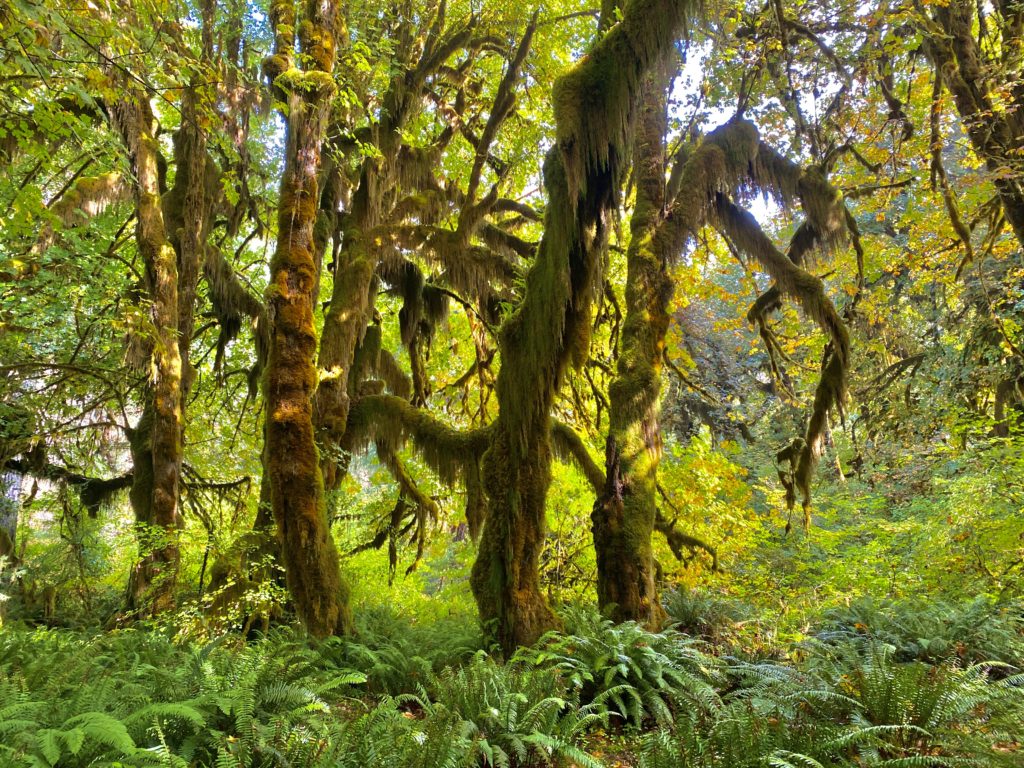
The western entrance of the park leads to the Hoh Rainforest with an annual precipitation of 12 ft. According to the National Park Service the Hoh Rain Forest is one of the finest remaining examples of temperate rain forest in the United States, which used to range from southeastern Alaska to Central California. The ancient dense forest of giant Sitka Spruce, Red Cedar, Big Leaf Maple and Douglas Fir is home to the northern spotted owl and provides cover for ferns and hanging moss -beginning to turn green after the dry summer. We hike the Hall of Mosses trail with dripping moisture and occasional misty rain. Occasionally the sun breaks through, and the maples, which are starting to show their fall colors, glow and provide a visual feast.
Hall of Mosses
As we hike the Spruce Nature Trail, we notice that the moss hangs higher and is brown. It makes us think about the drought and my search turns up news that in 2019, the national park service upgraded the Olympic National Park to severe drought. “The entire peninsula is abnormally dry,” said Todd Rankin, Fire Management Officer for Olympic Interagency Fire Management. “People often assume parts of the peninsula are not at risk of wildfire, but even the rain forest areas like the Quinault and Hoh river valleys and beaches along the coast are susceptible too.” The abnormally low amounts of rain and heat wave this summer tragically threatens these rainforests.
That said, I’m not sure we should be happy that the weather has cooperated with us as forecasted rains stayed away until late afternoon. We explore the many rivers of the river and Ray does a bit of fishing on the Sol Duc. We try for a 5 star reviewed bbq truck in Forks but strike out again as it is closed. Meanwhile back at the Riverview RV Park, we are dwarfed by two big ones.
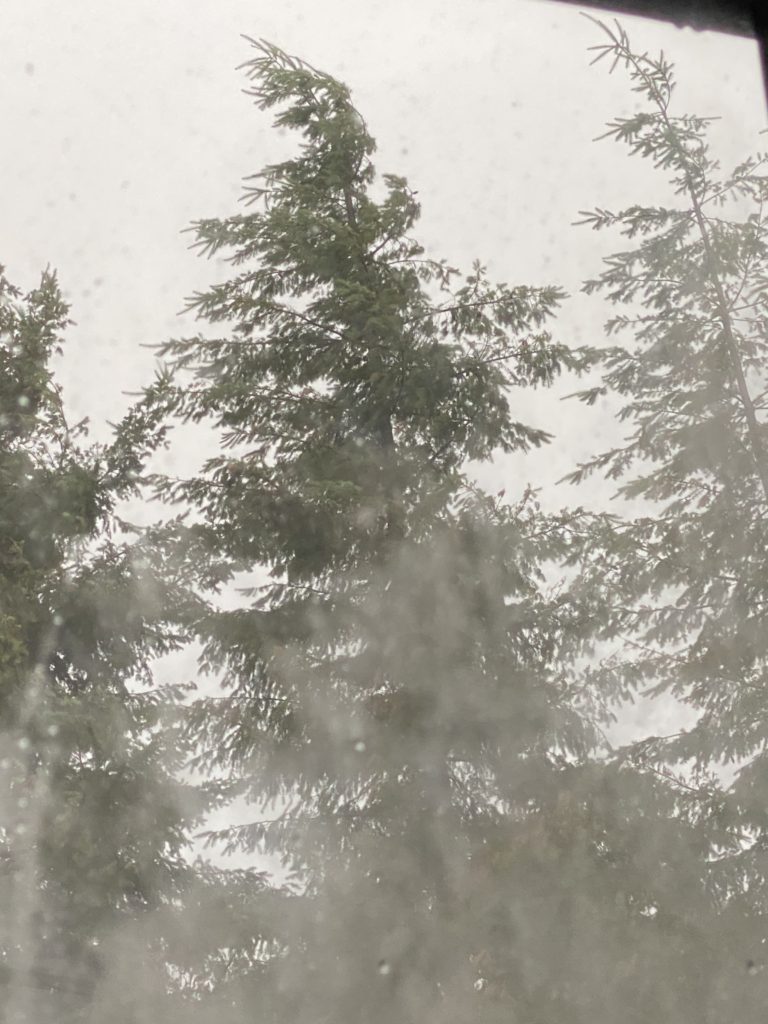
The first storm of the season, more typical of late Oct. arrived today. We leave early in the morning to avoid the rain and wind advisory and are now nestled between two very large rvs watching the rain and the wind which is gusting to 20mph, and occasionally shakes Cali-alto. The pine trees that line the Elwa Dam campground are blowing vigorously but the locals aren’t particularly worried; I think they see far worse. The water faucets sit in an dugout but someone forgot to put the lid back on so it is full of water. The campground manager volunteered to bail it out with a cup when we need to fill up; she seems like someone who can “take care of herself”. We are outside of Forks, a small town on the wild and open west coast, so only the hearty can survive!
Wet and windy Trees in the wind
The beast that pulled up next to us is a 38 ft Raptor RV pulled by a huge GMC pickup truck. They are a family of 3 and I can’t quite fathom the amount of space and how one maneuvers through town with it. Including the truck, it must be close to 50 ft!
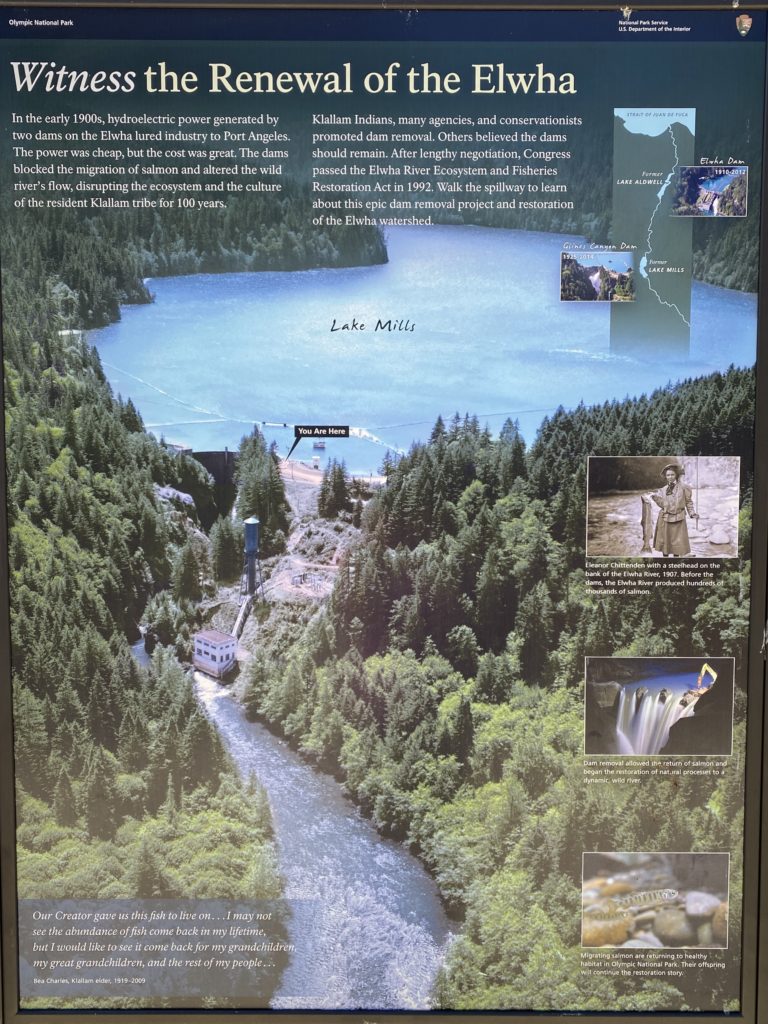
Glines Canyon overlook is the site of the upper Elwha dam removal, the larger of the two dams. and the highest dam removed in the US. The overlook is nicely designed with interpretive signs on the bridge and a gorgeous view of the restored river habitat. Restoration was painstakingly done over many years with plants regrown in nurseries and planted by volunteers.
The dam removal processRemnants of the damRestoration to a natural habitat
Unfortunately, the road to this overlook was washed out 5 yrs ago in a flood and is now only accessible by a 7 mi round trip hike. We walk past dense forest along the clear, wild Elwha River. In some areas, we see salmon flopping as they swim up river.
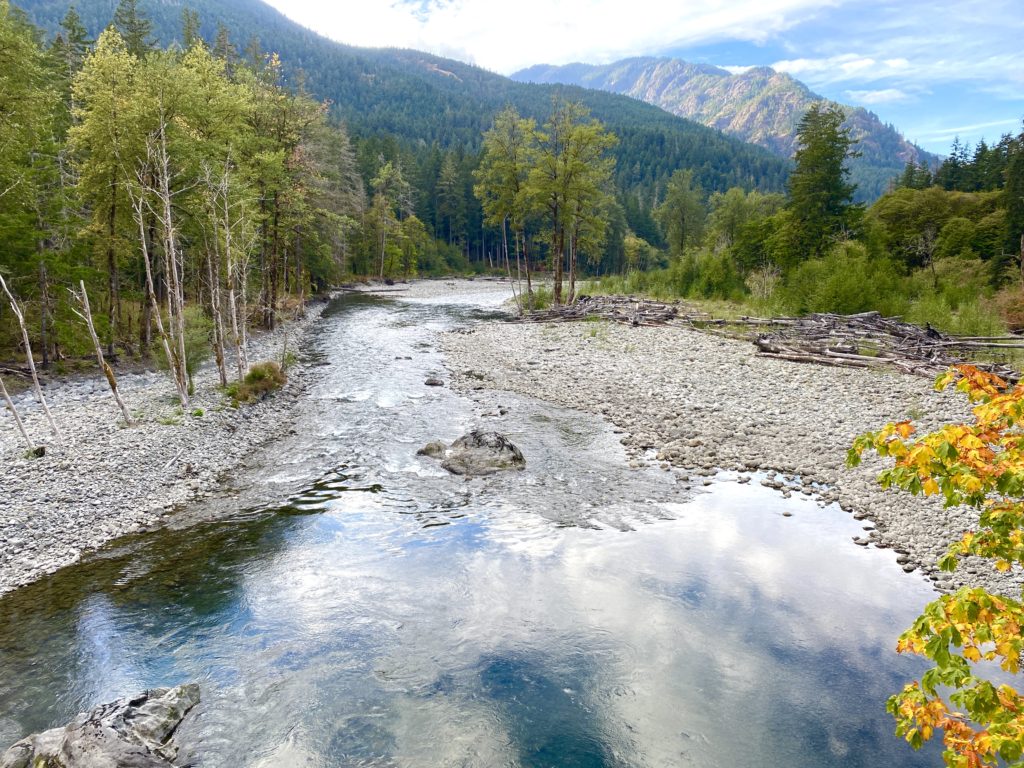
The wild and scenic Elwha River
We stop for lunch along the banks and notice schools of salmon spawning in a gravel bottomed section, their fins popping above the surface and large splashes as males chase each other to claim territory.
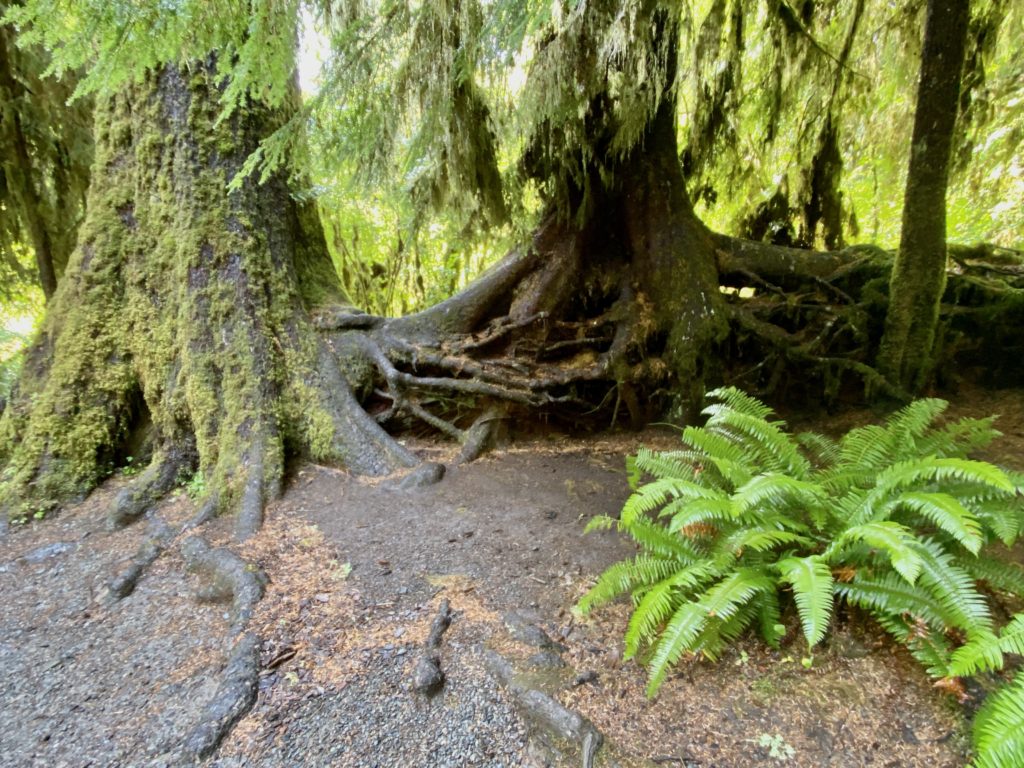
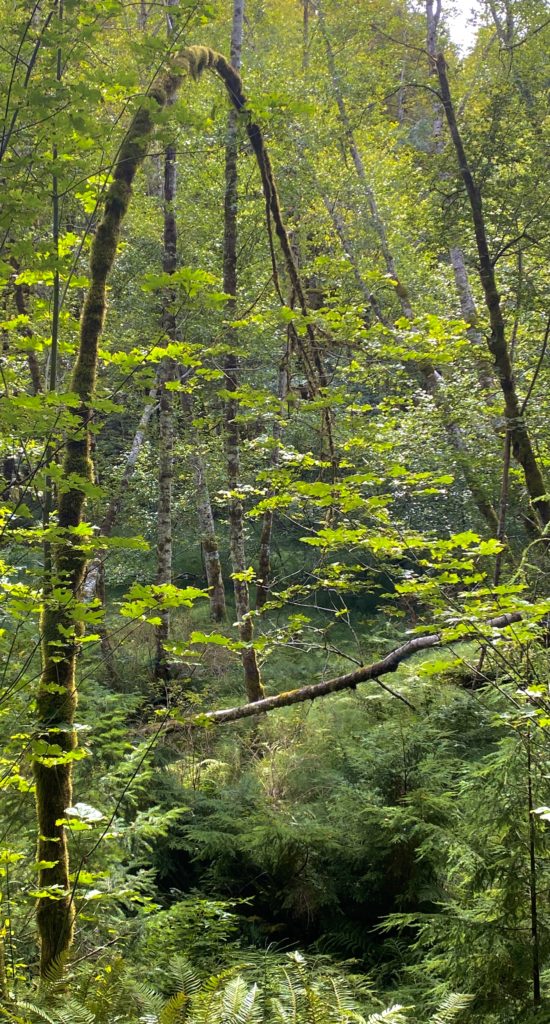
The Olympic forest
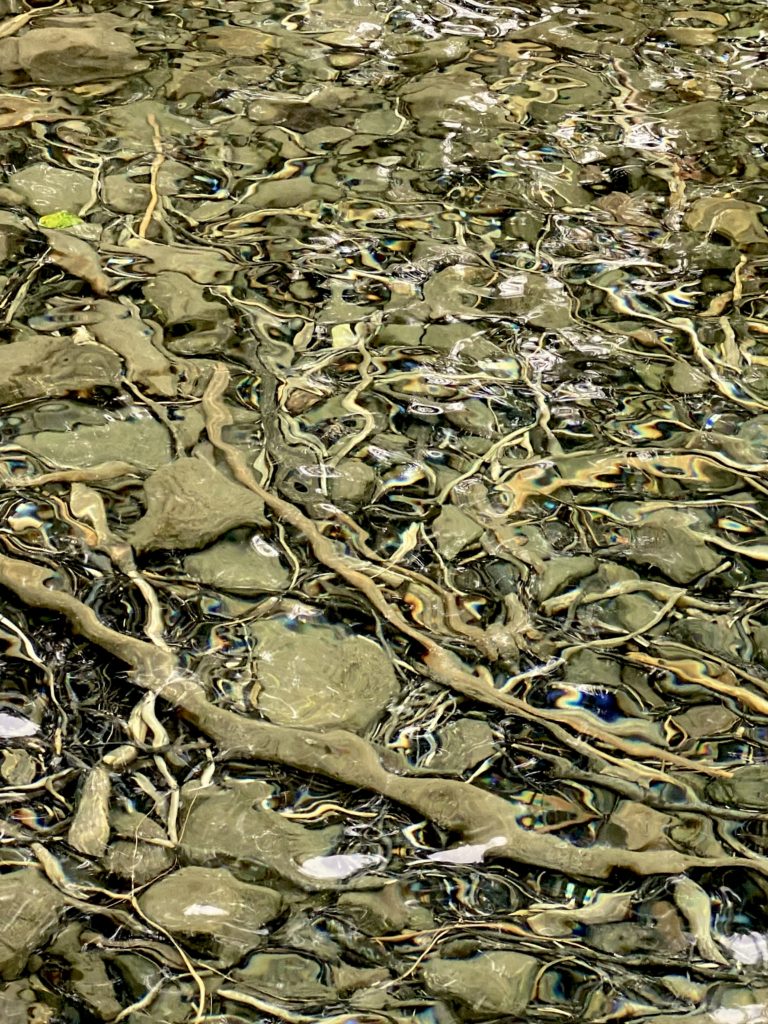
We end the day by Lake Crescent, the largest most pristine lake In Washington. I play around with reflections.
The lake bottomReflections
Tomorrow we leave this area and head to the western coast and the Hoh River and rainforest. It appears we will be experiencing rainforest weather as well for the next few days. Tomorrow marks a full week spent in Cali-alto’s 100 sq ft of space. We try for a small one-man and well -rated wood fired pizza place but alas he has decided not to open today.
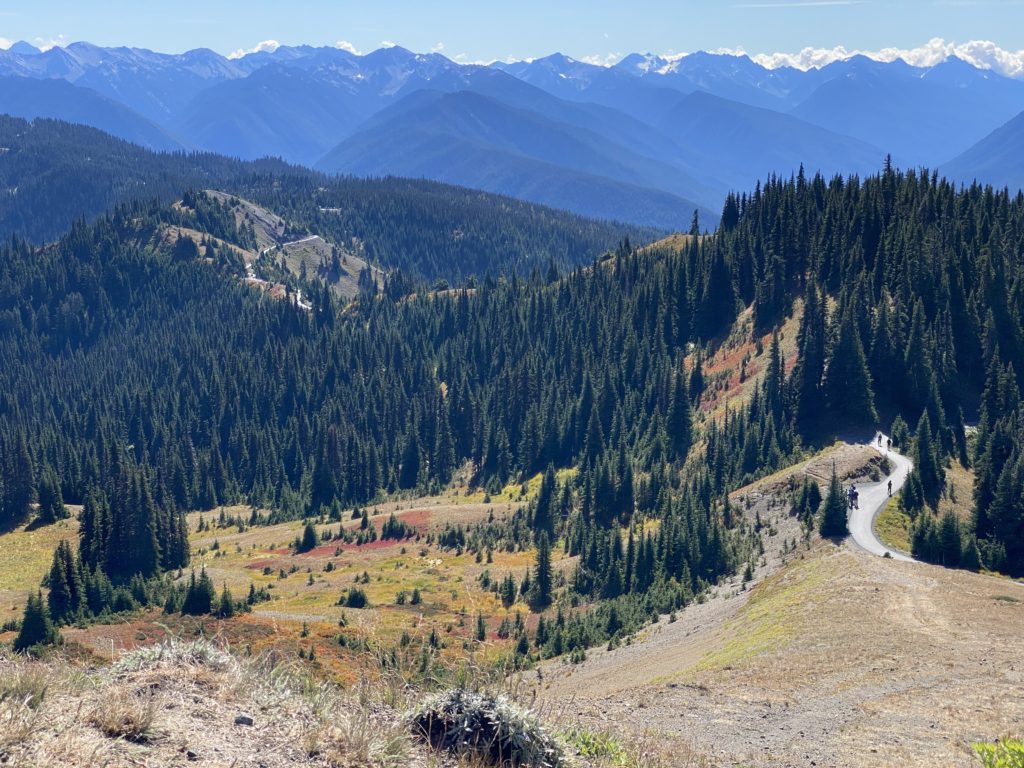
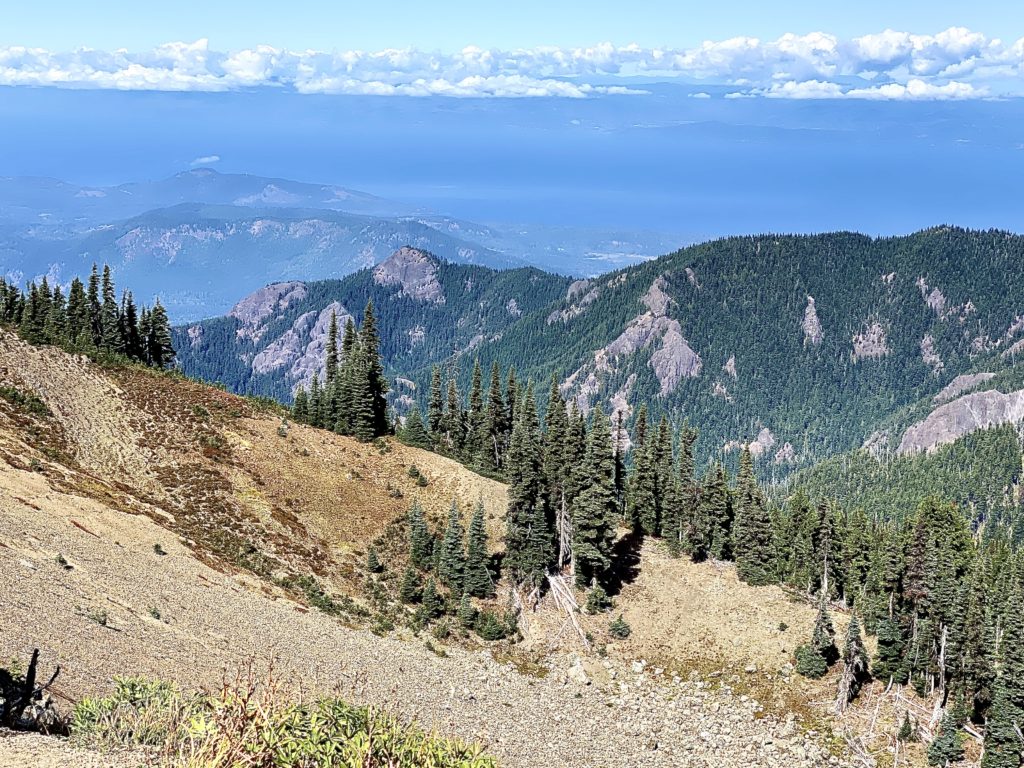
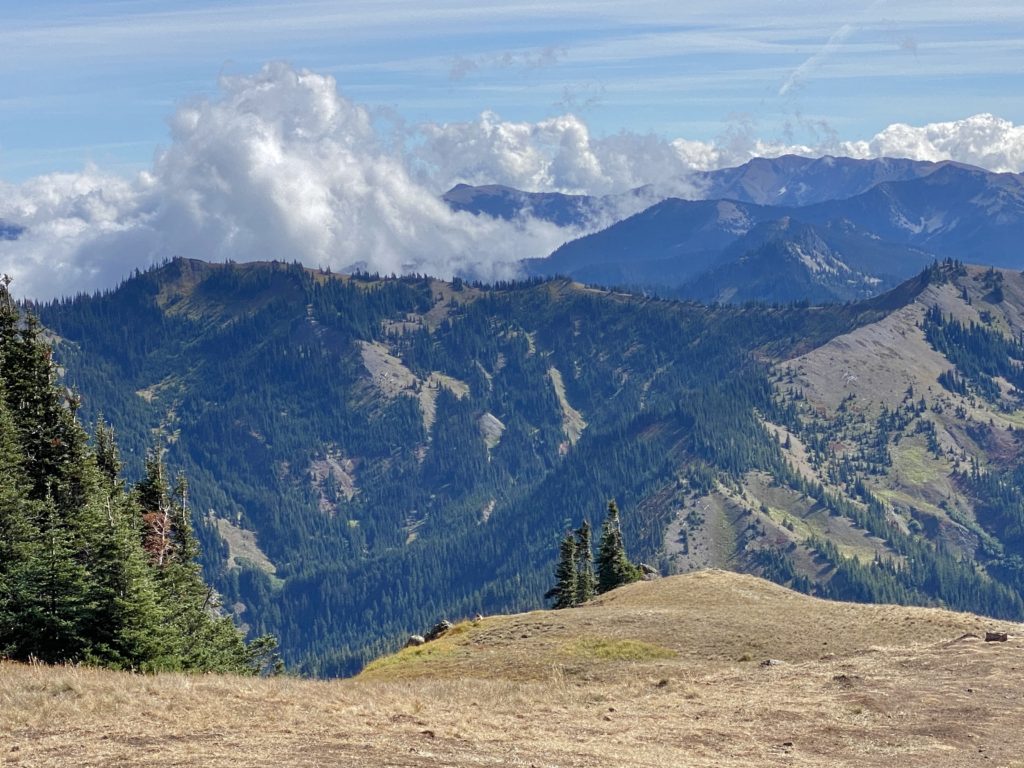
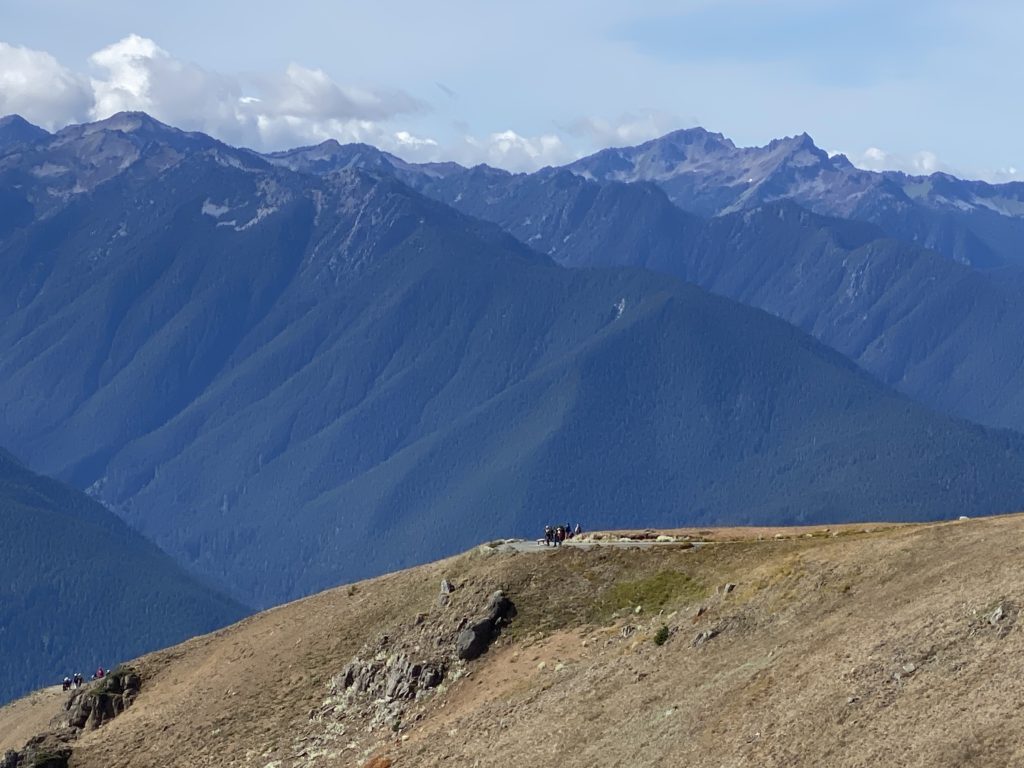
We leave early to drive 30 min. up Hurricane Ridge Road. Even though it is late in the season, trailhead parking lots fill up quickly in the morning. Hurricane Ridge is the jewel of the Olympic National Park. At 5,757 ft in elevation, the ridge sits above treeline and on a windy day, gusts can reach up to 70 mph. Lucky for us, it is a beautiful clear and crisp day. Past the parking lot is a steep but paved 1.6 mi trail that winds up Hurricane Hill to the ridgetop, providing a 360 degree breathtaking view of the mountain chain to the south, Vancouver Island and Vancouver to the north, forests and the Elwha Valkey to the west and the Olympic Valley to the east. There are many short spurs which lead to beautiful overlooks. We spend most of the day up here, enjoying the incredible sight. The majority of hikers on the trail are very fit, smiling and friendly seniors; I think they are newly retired baby boomers, cruising around in rvs. There seem to be a lot of us these days!
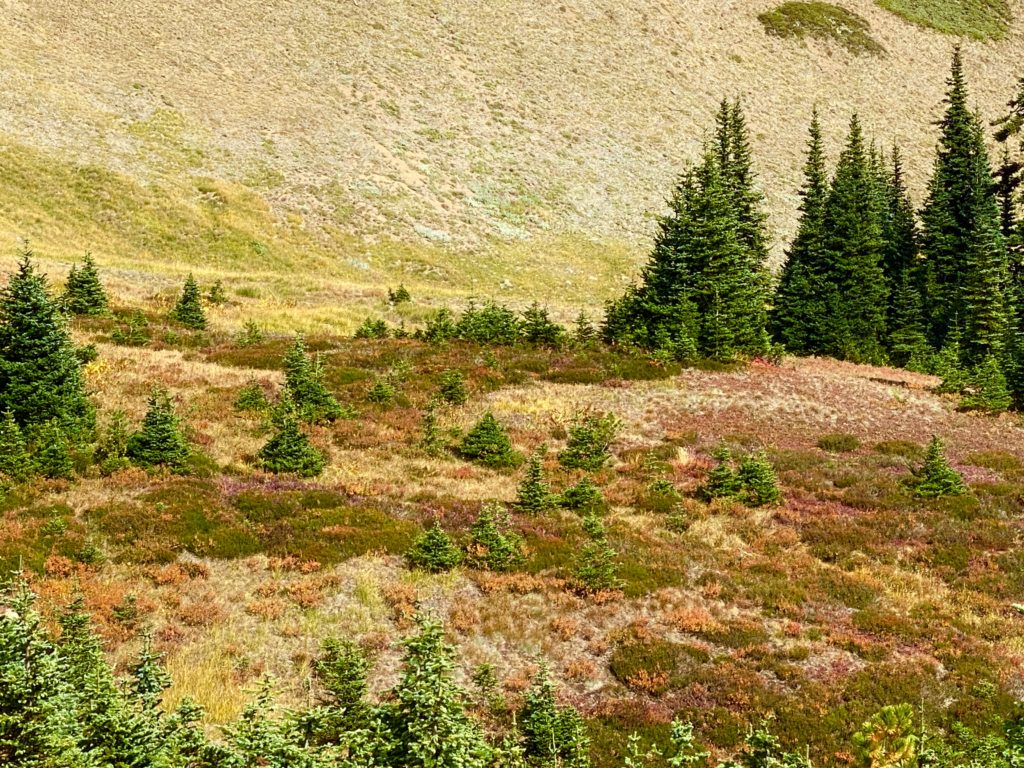
Mountain chain and view of the trail to the southVancouver and the Strait of Juan de Fuca to the northView to the eastForested mountains to the westFall colors appearing
Being out in the national park feels so perfectly normal until we are reminded of these unusual times in seeing everyone in the visitor center with masks on. Traveling via trailer means we always have a home base with all our creature comforts to come back to, and not having to interact with others unless we choose to. These days, we appreciate our toilet and shower, tiny as they are, and are snug as a bug protected from the elements. Looking around, we realize that there are very few options for outdoor dining in these places where the weather is often wet, windy or cold. The Olympic National Park is also not known for fine cuisine and thus, most of our meals are home-cooked. In ever rv park, we are by far the tiniest trailer and our unique design does attract attention. RVs seem to be getting bigger and bigger, so much so that they are a tight fit in these old rv park sites. I dream of a day when trailers run on electric motors, recharged overnight as we sleep.
The Elwha River is an example of how dam removal can successfully restore a salmon fishery and create a healthy ecosystem. Years ago, we watched a documentary about these efforts and it is thrilling to stand at the spot where one of two dams were removed.
Lower Elwha Dam removal site
The upper dam at Glines Canyon has an overlook but the road is currently closed. We are able to walk part way to see the now wild and natural Elwha River. Along the way, we see salmon that have swum all the way from the ocean to spawn here. It is a spectacular sight. The video below talks about this long dam removal process.
The Elwha
Today was all about fish. We hike out to the roaring cascades of the Sol Duc River where Coho salmon come in from the ocean between July and October. Watching them swim upriver and attempt to jump up the sections of the falls in order to spawn fills us with wonder at the power of nature. I manage to capture one on camera.
The Olympic National Park is mostly rainforest, very lush with moss covered tree trunks and spanish moss hanging from branches. It is misty this morning but the skies clear to give us a cloudy hiking afternoon and a lovely evening sunset.
Olympic National Park forest trailSunset at “near mouth” of the Elwha River
Calialto is our teardrop trailer and this week we take her on a coastal adventure, destination Olympic National Park, a long-time in the planning, delayed this summer by fires in California and Oregon but finally happening. This will be the longest trip in the trailer since picking her up in 2019. We had her checked by a mechanic in Concord with wheel bearings repacked. We’ve packed and repacked bedding and clothes in preparation for colder fall temperatures up north, and have a huge stash of pre-cooked frozen dinners and fresh produce, with plans to be self-sustaining due to covid concerns. Our route takes us through familiar and favorite territory, the Humboldt Redwoods with an overnight at the KOA in Benbo. Several slides along the Del Norte coast have resulted in ongoing road construction on 101, closing the road for many months. We were relieved to learn that this work has progressed well and we faced no delays on our drive to the KOA in Port Orford. The rv campground is heavily wooded and particularly beautiful.
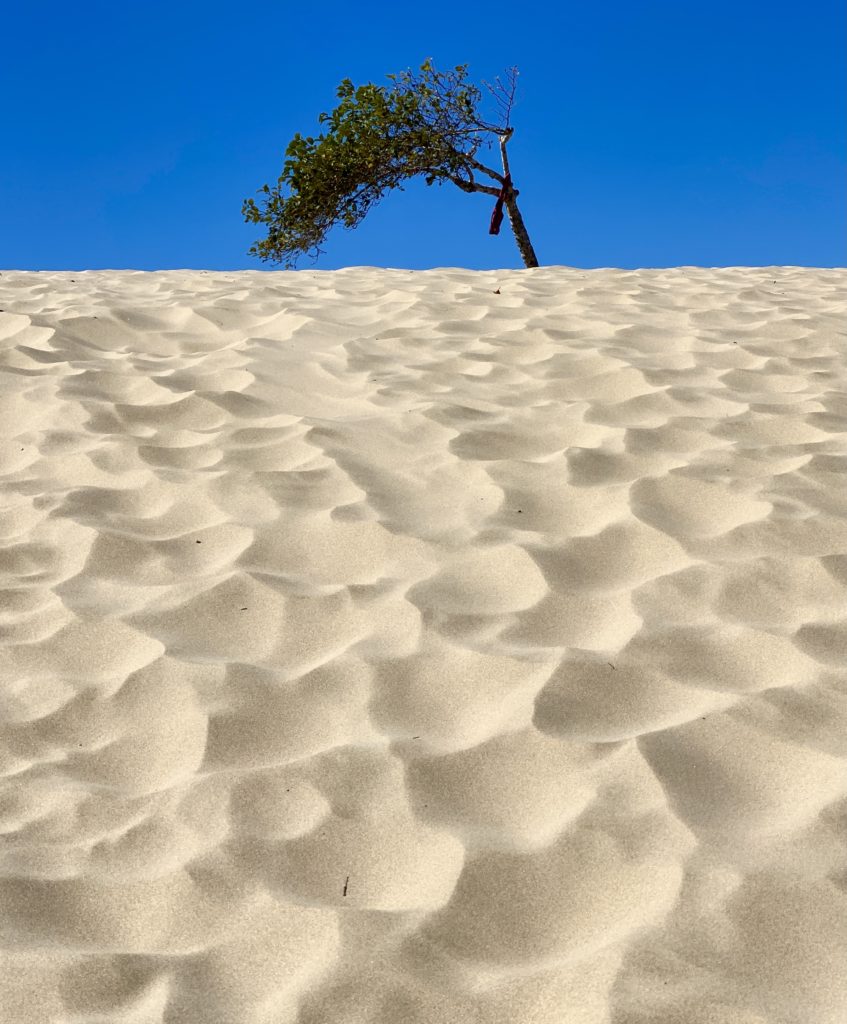
Up the coast of Oregon, the weather brings blue skies and air quality of 0 as we drive past the huge Oregon dunes.
Port Orford KOAOregon Sand Dunes
We spend the night south of Portland at Roamers Rest in Tualatin then cross waterway after waterway as the Williamette and Columbia rivers wind through Portland, and we enter Washington. The landscape is lush and green, dense with evergreens, rivers and lakes a feast for our eyes, so used to the parched lands of a drought ridden California. As we approach Port Angeles, we pass the bays, straits and islands of Washington’s northwest. We’ve reached the Elwa Dam Rv Park, home for the next 3 nights.