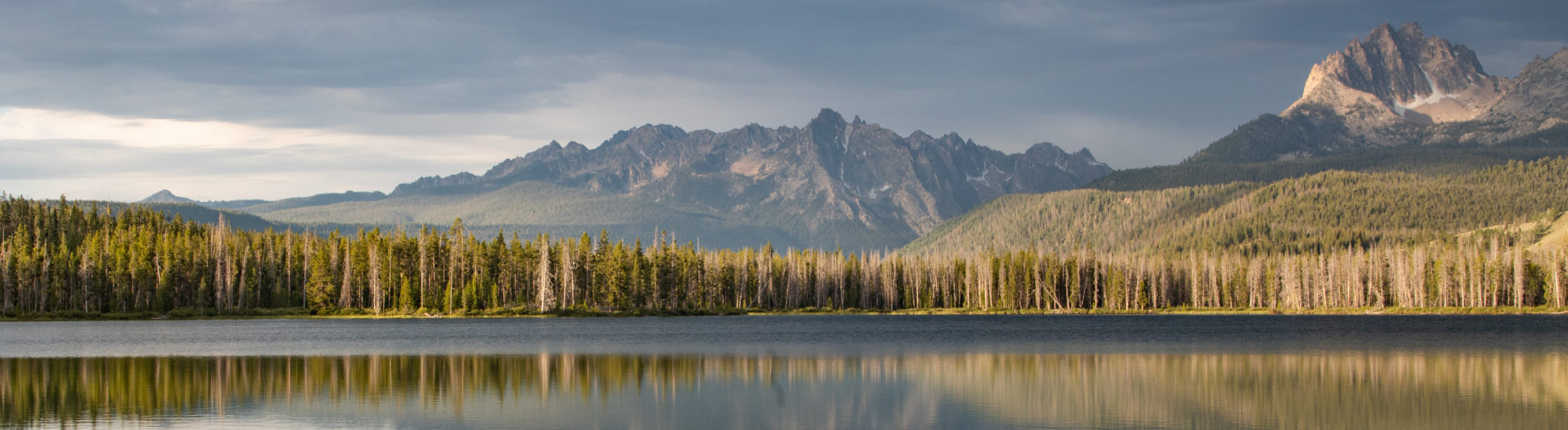
Today is a travel day as we make our way north to the Serengeti. We stop at Olduvai Gorge, the site of the Leakey’s 70 year study of archeological finds. From there it is a 3 hour ride on the bumpiest and dustiest road I have ever seen. The fine brown dust whips up as cars drive by and permeates throughout the car. It settles on everything-clothes, skin, seats etc. After a few hours, we all feel liked Pigpen in Charlie Brown. The dirt road is also heavily rutted and creates a journey that is jarring to every bone in our bodies and vibrates the car so badly it is amazing parts don’t fall off.


The Serengeti is 14,000 square miles comprised of the national park and Conservation areas. We will be in the central part for a few days.
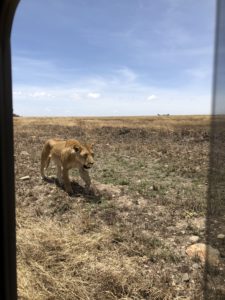
Our sighting of the day us a leopard in a tree. Leopards are solitary animals and will not share their kill. They will drag it into a tree to devour it. We learn that cheetahs on the other hand are great runners and do not climb trees. A few miles up the road, a lioness walks alongside our car, close enough to touch, oblivious to the passengers inside.
We arrive at Serengeti Serena Lodge, a far cry from the tented lodging of last night. The grounds are green and rooms ressemble thatched huts. Dinner is a circular buffet of salads, meats and side dishes, certainly not what I imagined we would be eating in Africa! A bit of commotion and excitement during dinner when a buffalo end up in the lodge’s pool. It takes several staff to chase him out and he rushes away.
The food selections have been impressive: fruits-watermelon, pineapple and banana Breakfast-eggs, sausage, bacon and breads Lunch boxes- chicken, salad and cake Dinner- grilled beef, chicken and fish with variations on carrots, zucchini and potatoes. Indian dishes are common.
We have been here a week now and I am struck by how little these Maasai people have compared to the safari guests that are in the hotels. The food we are served could feed a village, but most cannot afford to eat this way. Our driver tells us that the Chinese have been investing heavily in infrastructure, sending engineers and construction crews to build roads, buildings etc and providing sponsorships for students to study medicine, engineering, piloting etc. They also take alot of Tanzania’s natural resources. Schools are teaching children mandarin. The US provides much assistance by individuals, church groups and others in building schools, volunteer doctors, sponsoring children etc. We pass Maasai children in uniforms waiting for school buses. It appears to be a common thought that travelers may send money back or sponsor your child’s education.
We find the people in the hotels to be extremely respectful and service oriented.
The wildlife faces a huge challenge in poaching. Our driver points out a ranger carrying a AK37 and says this is a very dangerous job as poachers often have poison arrows. No one is allowed to be in the parks after 6pm as rangers are patrolling for poachers. In south africa, rangers killed poachers and left them, resulting in lions who developed a taste for humans and are attacking people. It is a difficult problem to solve but one that is endangering what wildlife is left, such as black rhinos, elephants, lions and giraffes.