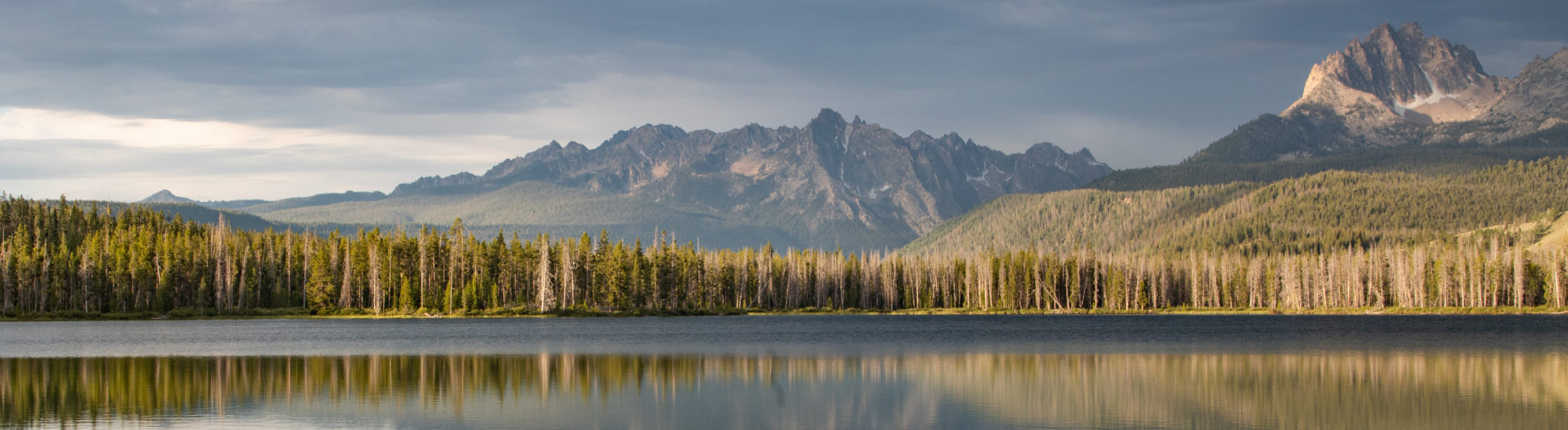
The Hoh River begins at the glacier of Mt. Olympus and flows for 56 miles to the west coast of the Olympic Peninsula and the Pacific Ocean with habitat for several species of salmon.
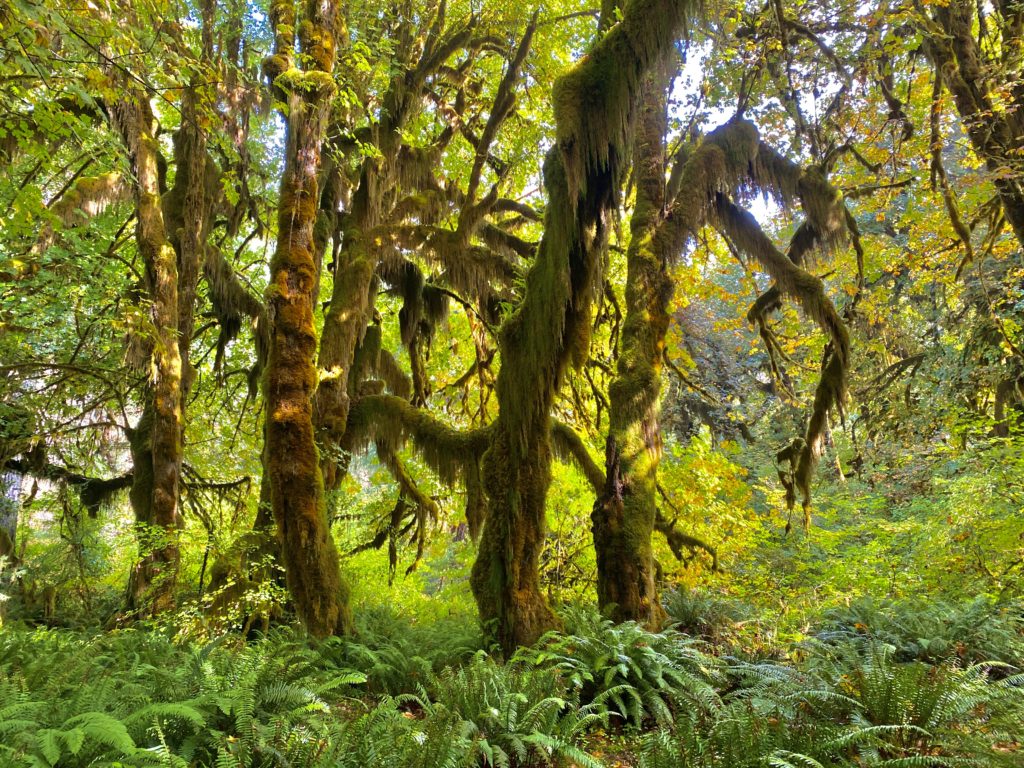
The western entrance of the park leads to the Hoh Rainforest with an annual precipitation of 12 ft. According to the National Park Service the Hoh Rain Forest is one of the finest remaining examples of temperate rain forest in the United States, which used to range from southeastern Alaska to Central California. The ancient dense forest of giant Sitka Spruce, Red Cedar, Big Leaf Maple and Douglas Fir is home to the northern spotted owl and provides cover for ferns and hanging moss -beginning to turn green after the dry summer. We hike the Hall of Mosses trail with dripping moisture and occasional misty rain. Occasionally the sun breaks through, and the maples, which are starting to show their fall colors, glow and provide a visual feast.
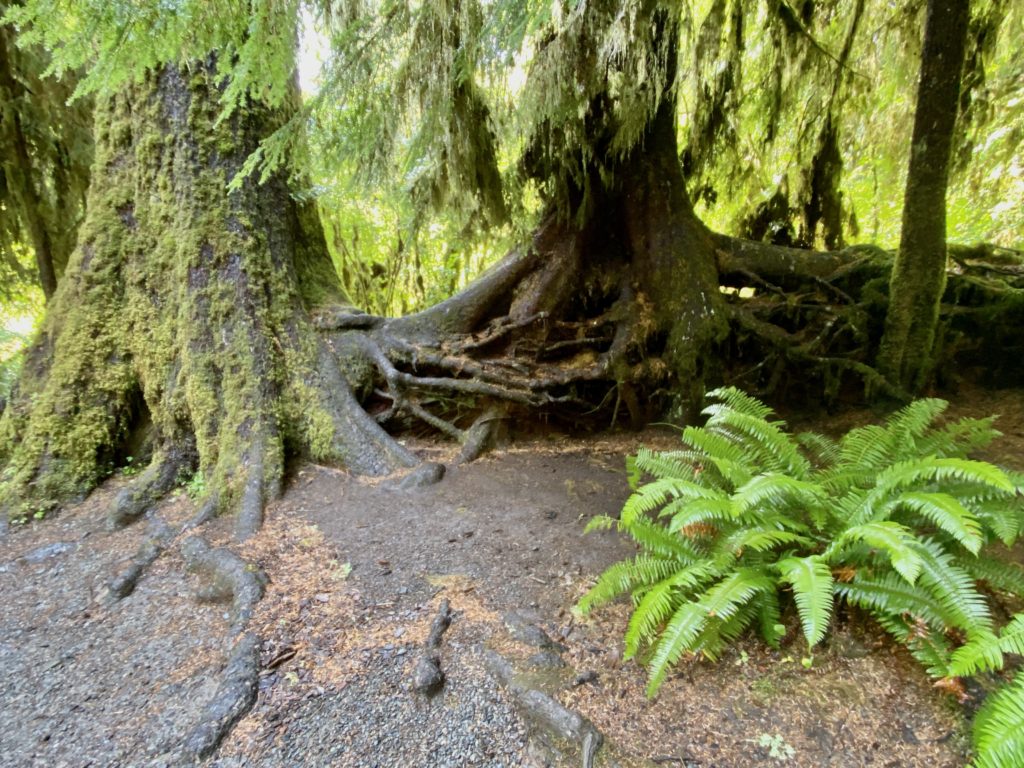
As we hike the Spruce Nature Trail, we notice that the moss hangs higher and is brown. It makes us think about the drought and my search turns up news that in 2019, the national park service upgraded the Olympic National Park to severe drought. “The entire peninsula is abnormally dry,” said Todd Rankin, Fire Management Officer for Olympic Interagency Fire Management. “People often assume parts of the peninsula are not at risk of wildfire, but even the rain forest areas like the Quinault and Hoh river valleys and beaches along the coast are susceptible too.” The abnormally low amounts of rain and heat wave this summer tragically threatens these rainforests.

That said, I’m not sure we should be happy that the weather has cooperated with us as forecasted rains stayed away until late afternoon. We explore the many rivers of the river and Ray does a bit of fishing on the Sol Duc. We try for a 5 star reviewed bbq truck in Forks but strike out again as it is closed. Meanwhile back at the Riverview RV Park, we are dwarfed by two big ones.
